
Here’s the blunt truth: referrals are lovely, but they’re not a growth plan if you want consistent bookings in 2026. If your clinic waits for word of mouth, you’ll have quiet weeks and scramble when demand drops.
I’ll give you a practical checklist of seven online moves that actually compound over time, plus what to track so it’s not vibes-based marketing. Each move maps to a simple model: Awareness → Connection → Conversion. That means getting found, building trust, then making booking easy.
No, you don’t need to dance on Reels every day. You need to be findable on Google, trusted by people who land on your site, and simple to book. Over the article we’ll cover local SEO, website conversion, content that builds confidence, Google Ads, social, reviews and automation — and when to DIY or hire help.
Need a quick start? Check a free review of your setup at Digital Marketing Services for naturopaths to see which stage needs work.
Key Takeaways
- Fix Google Maps and local listings so patients can find you.
- Tidy the website—clear services, easy booking, fast pages.
- Publish confidence-building content that answers real questions.
- Run tight ads that move people from Awareness to Connection.
- Collect reviews and automate reminders to lift bookings.
What’s stopping patients choosing your clinic online (and how to fix it)
Word-of-mouth is lovely, but it rarely scales fast enough to fill appointment books. Referrals reach a limit — they depend on the same small network and they don’t react quickly when you need bookings next month.

Why word-of-mouth hits a ceiling
Limited reach: personal referrals come from the same audience, so growth stalls. Speed is also a problem — you can’t crank referrals on short notice.
The trust gap for alternative care
People are curious but cautious. They want proof, clear fees, qualifications and recent reviews before they call. If your site looks fuzzy or vague, they leave.
Where patients drop off: search, site, or booking
- Can’t find you — poor search or Maps presence.
- Find you but don’t trust you — weak site content or few reviews.
- Trust you but booking is a pain — clunky forms or long phone waits.
10-minute diagnostic: search “naturopath near me”, open your listing on mobile, try to book, count clicks to appointment, read reviews as a stranger.
New patients matter, but retention does too — no-shows and one-off visits quietly kill momentum. Next: how Aussies actually search and compare when they need care.
How patients actually find a naturopath in Australia
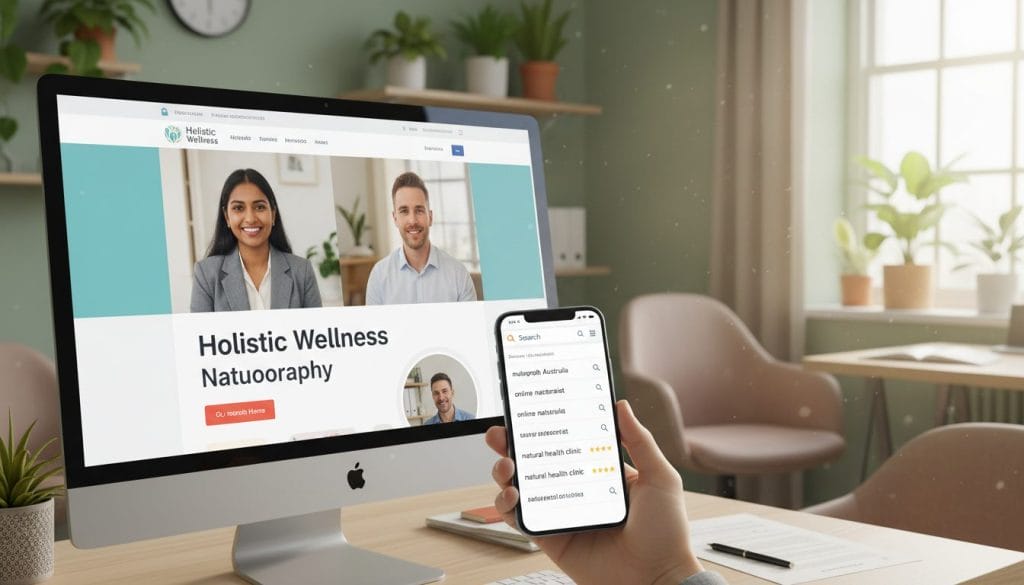
People in Sydney, Brisbane or Perth start with a simple search and follow a predictable path: find, compare, then choose. Understanding those steps tells you what content to create and where to put effort so you get useful results—not just more traffic.
Search intent: location and symptom-led queries
Two query types dominate: location intent (“naturopath near me”, suburb names like Bondi or Fitzroy) and symptom intent (“bloating naturopath”, “hormone support naturopath”).
- Location pages: one local page per suburb or catchment area.
- Service pages: one page per core offering—digestive health, hormone care, etc.
- Blog posts: short, useful answers to common worries that people search for.
The research phase: people compare before they contact
Most Aussies open 3–6 tabs. They scan reviews, staff credentials, fees and booking ease. They pick the clinic that feels safe, clear and straightforward.
Fast trust signals to show: qualifications, what happens in the first consult, clear pricing and a friendly tone that reassures people they won’t be judged.
Visibility vs conversion: being found is not the same as being chosen
Ranking on Maps and search is step one—visibility. Conversion is step two: clear pages, straightforward booking, and confident content that answers real worries.
Action plan: set up solid local SEO so you’re on the map, then map content to intent so your audience moves from discovery to booking.
1. Local SEO that gets you found on Google Maps (without gimmicks)
Local visibility isn’t flashy, but it’s the fastest way to turn nearby searches into real bookings. Start simple: your Google Business Profile (GBP) must be complete and honest.
- Choose the right primary category and list key services.
- Add an appointment URL, full hours, recent clinic photos and regular posts.
- Seed the Q&A with common queries so people find answers fast.
Practitioner vs clinic listings — keep it tidy
- One clinic profile works when staff share the same address. Use separate profiles only if practitioners operate from different locations.
- Avoid profile cannibalisation by keeping names and categories distinct.
Service areas and local landing pages
- List suburbs you genuinely serve — don’t spam half the country.
- Create one local landing page per suburb cluster, tie it to a service, and add a clear call to action (book or call).
Consistency checks and performance tracking
- Keep NAP identical across directories; clean duplicates and old addresses.
- Measure Maps impressions, calls, website clicks, direction requests and bookings from GBP.
Need help with setup or audit? See the Local SEO for Adelaide clinics and SEO services page for practical steps and management tips.
Build a website that turns visitors into booked patients
Direct answer: Your website’s job is simple: make the next step obvious and low-friction on mobile. Fast pages, a clear menu and a sticky Book button get more people from curious to confirmed in one visit.
Data backs this up. Top Marketing Agency reports sites that load quickly and show availability keep visitors longer. Blue Kanyon highlights that better user experience and conversion rate optimisation create measurable appointment lifts.
Clinic website essentials
Speed matters—aim for under 3 seconds on mobile. Use click-to-call, a sticky “Book” button and a simple menu: Services, About, Fees, Book, Contact.
Check accessibility: contrasts, readable font sizes and clear labels so every patient can use the site.
Service pages that answer worries
Each service page should say who it’s for, what you do and don’t treat, the first appointment steps, a typical timeline and how people often feel after care.
Add trust blocks: qualifications, memberships, clinic policies and clear fee ranges so visitors don’t panic and bounce.
Conversion fixes to do this week
- Cut form fields to essentials; show available times on the booking page.
- Add a short “no weird surprises” section: parking, telehealth, cancellations and what to bring.
- Set up conversion tracking for calls, form submits and bookings so your decisions follow numbers, not opinions.
“Enhancing user experience turns visits into appointments.” — Blue Kanyon
Quick wins: speed test, shorten forms, add fee ranges and enable click-to-call. Do these and you’ll lift conversion and keep more traffic on the page.
naturopath marketing online that educates without boring people
Good content answers the awkward questions people won’t ask at reception, and that’s where trust starts.
Content that reduces stigma and builds confidence
Start with plain answers: “what we do”, “is it evidence-based”, “what happens in a first consult”. Keep tone human — no long jargon — and end each piece with a clear booking step.
Blog topics mapped to real conditions and goals
Target condition-led queries Australians search for: gut problems, fatigue, skin, hormones, sleep and stress. Add goal-led posts like energy, weight support and immunity.
Use short FAQs, checklists and a 60–90 second explainer video to match how people prefer to learn.
Proof signals: qualifications, approach, and what to expect
Direct answer: show credentials, continuing education and a simple clinic process—assessment, plan, follow-up—so readers see a clear approach without big claims.
- Publish staff qualifications and short bios.
- Explain how supplements are chosen and when to see a GP too.
- Link blogs to service pages, and service pages to booking for clear conversion paths.
“Educational content that explains a holistic approach in simple terms builds patient confidence and lifts bookings.”
Measure time on page, scroll depth and assisted conversions so your content choices track towards real success.
Google Ads for naturopaths: fast visibility with sensible spend
Paid search gives fast visibility, but only when ads point to a page built to book—not your homepage. Target intent and match the message, and you’ll see enquiries fast without throwing money at curiosity clicks.
High-intent keywords vs curiosity clicks
Split bids between high-intent phrases (suburb + practitioner, “book appointment”, condition + “appointment”) and low-intent queries like “what is…”. Focus budget on the former to improve leads per click.
Location targeting that avoids wasted budget
Use radius or suburb targeting, exclude irrelevant postcodes and schedule ads for hours you can answer calls. Small tweaks like this cut wasted spend and lift ad performance.
Landing pages and conversion tracking that show what’s working
Send clicks to a dedicated page that lists fees, what to expect and one clear CTA. Track calls from ads, form submits and bookings so you can optimise campaigns month-to-month.
Cost-per-lead benchmarks and what influences them
Cost-per-lead depends on competition, location, landing page quality, offer clarity and reviews. LxP Digital and other agencies report immediate enquiries when campaigns are tracked and optimised.
For practical setup and management, see Google Ads management for clinics—a sensible place to start if you want measurable results without hype.
Social media marketing that feels human, not “influencer-ish”
Consistency beats chasing every platform — choose a couple and show up with useful, human content. That’s the direct answer: pick 1–2 places you can maintain and post content that answers FAQs, shows your process and builds familiarity.
Pick your platforms
Instagram = visibility and quick educational bites. Facebook = local community, groups and longer trust-building posts. YouTube = longer explainers that help SEO and patient education.
Content pillars that work
- Education: myth-busting, simple tips and short how-tos.
- Behind-the-scenes: a clinic day, what a first consult looks like.
- FAQs: fees, timelines and what to expect after a visit.
Community trust and clear boundaries
Have DM scripts that push personal advice to booked consults. Never diagnose in messages or comments — keep replies privacy-first and professional.
“Professional, compassionate content that educates builds trust and awareness.” — LxP Digital / Blue Kanyon
Measure saves, shares, profile clicks and booked consults that mention your posts. That shows whether social media and content are actually filling the diary.
Reputation management that builds trust before the first appointment
Direct answer: reviews are your online word-of-mouth — a steady trickle of recent feedback beats a panic sprint once a year.
How many reviews you need and where they matter most
There’s no magic number, but aim for several recent, local reviews so a stranger thinks, “this place looks legit.”
Google Business Profile is priority one; Facebook matters if your community uses it heavily. LxP Digital reports 60+ verified 5-star reviews as a strong proof signal — that volume helps convert interest into bookings.
Simple review request systems patients actually use
Automate a one-tap link via SMS or email sent within 24–48 hours of the appointment. Ask when someone’s had a win or felt heard — timing raises completion rates.
- Short message, clear call to action, and a link to leave feedback.
- Train reception to ask at checkout and offer the link on the receipt.
Responding to reviews the right way (including the spicy ones)
Thank positives briefly and keep patient details private. For negatives, stay calm, apologise for the experience and invite offline contact — don’t argue in public.
“Thanks for your feedback — we’re sorry you felt that way. Please contact us at [phone/email] so we can resolve this.”
Good reputation management turns a complaint into a chance for service improvement and better results down the track.
Reduce no-shows and lift re-bookings with simple automation
Automation is the polite tap on the shoulder that keeps appointments on the calendar without you chasing people all day. It’s a small management change that delivers steady growth in bookings and better care continuity.
Direct answer: set up a short, consent-based sequence and you’ll cut no-shows while sounding human, not robotic.
Reminder sequences that don’t feel naggy
- Booking confirmation immediately after they book.
- 48-hour reminder with reschedule link.
- Same-day message with parking or telehealth instructions.
Post-appointment follow-ups that encourage continuity of care
Send a one-paragraph summary email, a gentle supplement reminder and a clear re-book link. Keep tone clinic-branded and helpful.
| Metric | Why it matters | Target |
|---|---|---|
| No-show rate | Shows appointment reliability | Under 5% |
| Rebooking rate | Measures ongoing care and growth | 30%+ within 90 days |
| Time-to-next-appointment | Tracks continuity and performance | Under 60 days |
Use templates to reduce admin load and keep messages consistent. Keep messages short, consent-based and avoid clinical details in SMS. Ethical campaigns that respect privacy deliver the best long-term results.
“Automation and nurturing sequences reduce admin, improve patient attendance and lift clinic performance.”
Comparison table: DIY vs hiring a digital marketing service for clinics
Choosing whether to DIY or hire pros is really about time, tolerance for trial-and-error and what you want your clinic to look like in six months.
When DIY makes sense: small clinic, tight budget, and you enjoy learning. You can handle basic local listings, simple content and light ad tests if you have extra hours.
When to hire: time-poor owners, multi-practitioner clinics, or when you need a steady pipeline. A team of experts adapts faster to algorithm changes and keeps performance consistent — as Top Marketing Agency notes, teams pivot quicker than solo owners.
What “strategy-first” actually looks like
Strategy-first means diagnose, pick the right channels, set tracking, run short sprints and review monthly. Blue Kanyon calls this a fractional CMO approach — practical, measured and focused on outcomes.
| Area | DIY | Agency / Team |
|---|---|---|
| Setup speed | Slow—learning curve | Fast—experienced experts |
| Ongoing time | High—owner hours | Low—outsourced team |
| Cash cost | Low upfront | Higher monthly |
| Skill required | Basic to advanced | Built-in expertise |
| Likely outcome | Variable—depends on effort | Predictable growth with a plan |
Choice tip: pick what fits your season of business. DIY is valid, but a strategy-led service gives a reliable plan and frees you to run the business.
Proof, stats, and a real-world result to sanity-check your plan
Real proof is in numbers—pick a few metrics that show whether campaigns are actually filling the diary. Below are trust signals, the key performance measures to track and a concrete client result to show what’s possible.
Industry evidence: reviews and trust signals
Why reviews matter: LxP Digital highlights that clinics with 60+ verified 5-star reviews present a strong trust signal for new patients. Recent, local reviews beat an old handful every time.
Another real-world sanity check: a Blue Kanyon client reported about 20% business growth after focused work on clarity and conversion. These numbers show what steady effort can deliver.
Campaign proof points to track
Think like an owner—focus on meaningful metrics, not vanity. Track:
- Enquiries per week
- Booked consults (completed intakes)
- Inquiry-to-intake rate and no-show rate
- Cost-per-lead and how it aligns with your goals
One client result: completed intakes up 124% in 90 days
What’s possible: LxP Digital reports a +124% increase in completed intakes in 90 days after combining automation, review ramp and improved booking flow. That single client case shows the compounding effect of clear trust signals and frictionless booking.
Expert perspective
“Trust plus clarity and frictionless booking beats flashy content every time. Focus on the patient journey, measure the right numbers, and optimise from there.”
Bottom line: results vary, but tracking enquiries, intake rate, cost-per-lead and no-shows keeps you honest. Pick 3–4 numbers that match your goals and review them weekly to drive steady growth and long-term success.
Conclusion
This wrap-up ties the seven tactics into one simple system so you can pick a clear next step. Use the Awareness → Connection → Conversion framework to see each action as part of a plan, not a scattergun approach.
Quick system: Local SEO and Google presence = Awareness; content, website and reputation = Connection; booking flow, automation and ads = Conversion. Pick one lever for this month and one foundation fix to keep progress steady.
Need a hand? Check local SEO or Google Ads/PPC service pages and Book a free audit at loudachris.com.au. Chris/Loudachris can run the audit and point to the highest-impact move.
FAQ
How long does local SEO take? Generally 3–6 months for noticeable local ranking and booking uplifts. Consistent listings, pages and review work speed results.
Do I need Google Ads if referrals work? Ads give predictable extra demand and fill gaps fast. Use them to test offers and promote availability when your diary needs lifting.
What’s the simplest way to cut no-shows? Automated confirmations plus a 48‑hour reminder with reschedule link. Keep messages short and clinic-branded.
You don’t need gimmicks—just clarity, trust and a booking path that’s smoother than a flat white.
FAQ
What are the quickest ways to attract more patients to my clinic online?
Why does word-of-mouth stop bringing new patients after a while?
How can I close the trust gap people feel with alternative care?
Where do potential patients drop off most: search, website or booking?
Which search queries should I target to be found by locals?
How do I make service pages that actually convert visitors into patients?
What local SEO tasks make the biggest difference on Google Maps?
How many Google reviews do I need to make an impact?
Should I run Google Ads or focus on organic SEO first?
What’s a sensible Google Ads strategy for clinics?
How can social media feel human without being “influencer” style?
What content should I publish to reduce stigma and build confidence?
How do I reduce no-shows and increase re‑bookings with automation?
Is it better to DIY clinic marketing or hire a digital marketing service?
What metrics should I track to know my plan is working?
How do I make my clinic website accessible and fast for mobile users?
What are simple reputation management steps clinics can start today?

Chris Lourenco is the director of Loudachris Digital Marketing, an Adelaide-based SEO, Google Ads, and web design agency. Chris excels in crafting bespoke, results-driven strategies that help businesses get more traffic, leads and sales.