
Reality check: seven in ten couples now kick off their wedding plans on their phones while waiting for coffee, not from a brochure. So if you’re chasing enquiries, you need tactics that turn attention into bookings — not just likes.
This is a practical how‑to for Australian wedding planners who want more enquiries and less guesswork. I’ll show five simple, stackable strategies for 2026 that actually work together: your site as a hub, SEO, Google Business Profile plus reviews, socials and local directories, then paid ads with nurture. No fluff. No hard sell.
We’ll also acknowledge seasonality and the feast‑or‑famine cycle — the aim is to smooth those bumps so cashflow is steadier. Expect one comparison table and a quick checklist style throughout, so it’s easy to skim and act.
Want the full playbook? Start here, read on, then follow the steps and use the handy checklist. For deeper setup tips see digital marketing for wedding planners.
Key Takeaways
- Most couples start planning on phones — meet them there.
- Five stacked tactics turn clicks into bookings, not just likes.
- Use your website as the hub, and bolster it with SEO and GBP.
- Seasonality is real — marketing should smooth the slow months.
- Skimmable checklists and one comparison table make next steps simple.
Why wedding planners in Australia need a digital game plan right now
If your calendar has gaps, a simple visibility plan fixes that fast. Most couples now hop between search, socials, Easy Weddings and mates to decide — and they rarely read past the top three results.
Where couples actually look first
First stop: Google for a quick shortlist. Next: social media for a vibe-check. Then directories for side‑by‑side comparison. Finally, word of mouth to validate a pick.
What visibility really means (and why it fills calendars)
Visibility isn’t just being seen. It’s being seen by the right couples in the right suburb or region, with the right budget and style match. That means fewer dead-end enquiries and more booked dates.
Make couples decision-ready in under two minutes: can they answer “Can I afford them?”, “Do I like their style?”, and “Are they legit?” If yes, you move from curious to contact fast.
We’ll next show how to earn top-of-funnel attention — then convert it — without you needing to become a full-time marketer.

Key takeaways you can steal in 10 minutes
You can make more high-quality enquiries with under ten minutes of focused work. These quick wins focus on first impressions, local presence and being decision-ready. Do them now and your calendar will thank you.
- Website‘s job is leads, not applause — clear service pages, proof and an enquiry path that takes 30 seconds.
- Business profile (Google) is the fastest local win — keep it accurate, photo-rich and actively collect reviews.
- Consistency beats chaos — schedule a few quality posts a week so you stay front of mind when couples search.
- Show pricing cues, FAQs and outcomes to filter tyre‑kickers before they hit your inbox.
- Build trust with real wedding stories and supplier validation, not generic claims.
Win the first impression: make your website a lead machine, not a photo album
Make your homepage and service pages ask-focused. Lead with one clear action — contact, call or book a meeting.
Use short proof blocks: quick quotes, a pricing cue and a visible meeting calendar. That lowers friction and speeds enquiries.
Show up locally: keep Google Business Profile tight and review-rich
Confirm your hours, phone and address are accurate and match your website details. Add recent photos and reply to every review.
Remember Easy Weddings: 9 out of 10 couples read reviews before enquiring. That stat pays to respect.
Stay consistent and be decision-ready
Post a few useful pieces of content each week — portfolio shots, short tips and supplier tags. Even a small rhythm keeps you familiar.
Include pricing cues and an FAQ section so potential clients see value fast and send better enquiries to your planner inbox.
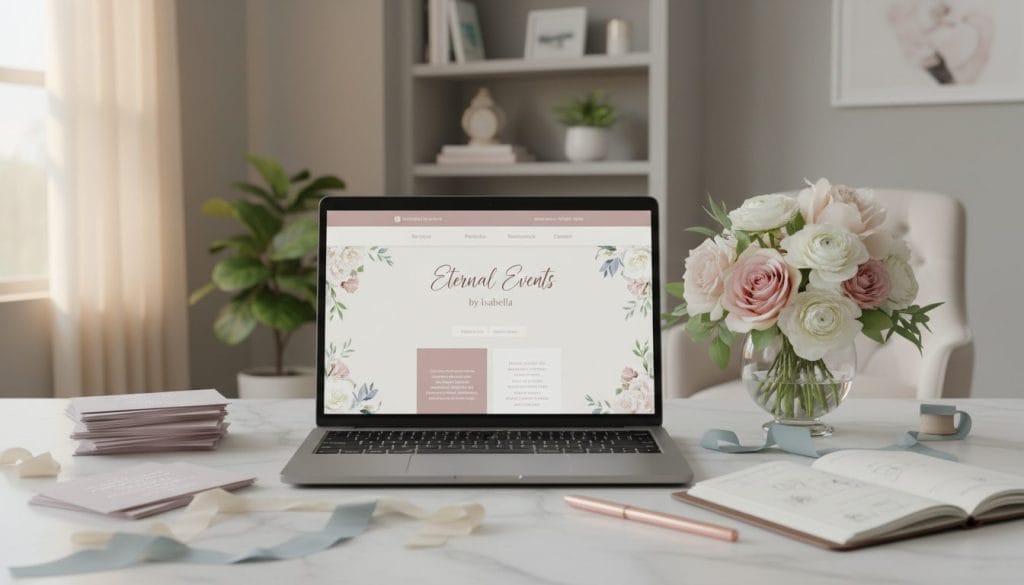
1) Website first: turn your site into a lead-generating hub
Make your site the one place couples can decide to contact you, fast. The direct answer: if a curious couple can’t find pricing, proof and a clear contact path in under two minutes, you’re paying the pretty‑site tax. Fast clarity wins enquiries.
Evidence: a site that combines sharp service pages, real photos and a meeting calendar converts far better than a gallery-only page. Practical steps first:
Must-have pages and what each should do
- Services — who you help, packages, and one pricing cue so potential clients self-filter.
- Portfolio — tell stories, not slideshows: brief brief, constraint, solution, result.
- Testimonials — specific outcomes and short quotes that answer trust questions.
- Contact — click-to-call, short enquiry form and a visible calendar link.
- FAQ — quick filters: venue sizes, coordination-only options, and average costs.
Interactive bits that actually convert
Use a short form (name, date, venue, guests, budget range), a meeting calendar so couples can lock a consult, and click-to-call for mobile users. Add live chat or a simple chatbot to catch after-hours leads and push warm contacts to book.
Show your USP with real wedding stories
Highlight one-liners that show problem → your solution → result. Real constraints (budget limits, council rules, weather) make the story believable and useful.
Mobile speed and navigation
Compress photos, avoid heavy sliders, use a simple menu and a sticky enquiry button. Faster pages retain potential clients and lift form fills.
Internal link suggestion: link to Loudachris “Web Design for Small Business” or “Website Audits” for an audit or redesign guide.
Quick result: One Adelaide wedding planner we worked with lifted enquiry form submissions by 38% after we rebuilt their service pages and simplified the mobile enquiry flow.
2) digital marketing wedding planners: SEO that targets couples with intent
SEO is what puts you in front of couples who are ready to book, not just browse. Treat it as the channel that captures search intent—people typing suburbs and service types into search engines when they want to hire.
Keyword research that matches real searches
Focus on long‑tail phrases: think “wedding planner Adelaide hills”, “on-the-day coordination Sydney”, or “micro wedding planner Melbourne”. Include suburb variants and service types so your pages match intent.
On‑page basics
- Title tags with service + location.
- Meta descriptions that promise clear outcomes.
- H1/H2 structure, internal links between services and real stories.
- Descriptive image alt text for portfolio shots.
Local signals and backlinks that matter
Keep a consistent NAP (name, address, phone) and add an embedded map on contact pages. Ask venues, photographers and local blogs for preferred supplier links and styled‑shoot credits—these backlinks move the needle.
“Your Google Business Profile is often the first impression couples have of your brand, so you’ll need to keep it up to date.”
Quick next step: update one service page with a suburb term, title tag and alt text today. For a local audit, see Loudachris “SEO Services Adelaide” or “Local SEO”.
3) Google Business Profile: your quickest local visibility win
Think of your Google Business Profile as your local trust card on search and maps. Couples often spot your listing before they reach your website, so tidy details convert curiosity into contact fast.
Profile hygiene checklist
- Hours — correct for season and public holidays.
- Services — list planning, coordination and elopements.
- Categories — pick the closest match so you appear in relevant searches.
- Website link, phone and enquiry email — make calling or booking one tap away.
- Service areas and fresh photos — add real event shots and the suburbs you cover.
Posts, Q&A and messaging
Use Posts to show recent weddings, availability notes and a short CTA to enquire. Q&A is perfect for pre‑handling common couple questions — pricing ranges, travel and inclusions.
Turn on messaging only if you can reply quickly. Ghosting a ready-to-book couple is a self-own and hurts your results.
“Most couples click one of the top three Google results — your profile can be that first impression.”
| Quick action | Why it helps | Time to do |
|---|---|---|
| Update hours & contact | Prevents missed calls and wrong directions | 5 minutes |
| Add recent photos | Shows style, builds trust and boosts clicks | 10 minutes |
| Post availability note | Captures couples ready to book | 3 minutes |
Quick tip: keep details consistent across your site and other listings. For a local audit or more setup help see this guide.
Reviews and social proof: build trust faster than any ad
A handful of thoughtful reviews can turn a browsing couple into a booked client. Planning is emotional and expensive, so people borrow confidence from other couples’ experiences.
Why couples care — and where they look
Easy Weddings reports 9 out of 10 couples read reviews before enquiring. WeddingWire shows many view reviews as essential when choosing a vendor.
They check Google, Easy Weddings-style directories, Instagram highlights and your site.
Simple, non-awkward ways to ask
- Short post-event email with a direct link to leave a review.
- Quick text with a one-line prompt and mobile link.
- Include a review ask in your offboarding pack or follow-up call.
Prompts to reduce writer’s block
- Mention what you were worried about and how it turned out.
- Note one thing we handled that made the day easier.
- Describe how the day felt — relaxed, joyful, easy.
Where to show proof
Feature snippets on the homepage, service pages, portfolio stories, your Google profile and socials. Detailed reviews beat vague “so good!” lines — they pre-qualify future enquiries.
| Action | Why it works | Time |
|---|---|---|
| Send post-event text | High open rate, quick reply | 2 minutes |
| Email with direct link | Easy for customers to leave a review | 5 minutes |
| Feature detailed snippet on homepage | Builds immediate trust for new visitors | 10 minutes |
| Share review as a proof post | Shows real results between pretty photos | 5 minutes |
4) Social media that actually brings enquiries (not just likes)
Direct answer: social media only works when it’s a system that moves people to your site and your enquiry form, not a highlight reel you post when you remember.
Keep a realistic rhythm: aim for three posts a week and 3–5 stories. Batch-create a fortnight’s worth of content in one session so you don’t burn out.
Content pillars to rotate through each week:
- Real wedding recap — one short result, one quote and a clear photo.
- Behind-the-scenes — problem solved or timeline tip during setup.
- Quick tips — 15–30 second videos like “3 things couples forget”.
- Supplier shout-outs — tag photographers, venues and celebrants.
- “My process” post — explain how you make planning easier.
Use location tags and 6–10 relevant hashtags — state, city and suburb — and avoid spammy 40-tag dumps. Each post should include one clear next step: link to a services page, a lead magnet or a calendar link. Don’t rely on “DM me” as the only CTA.
Video is the trump card: 15–30 second Reels with venue walk-throughs, setup time-lapses or calm day-of clips outperform static posts. Make every second post nudge couples toward a booking or checklist.
Next step: build a simple social calendar and set one weekly hour for engagement — reply to comments, save tags and follow venue accounts. Small, steady effort builds brand recall and brings real enquiries.
5) Directory listings that couples already use (and how to optimise them)
Directories work because couples are already in compare-and-shortlist mode — make your listing the easy pick.
In Australia about 80% of couples use Easy Weddings when planning, plus many check Google and socials. That means consistency across listings matters: same phone, same hours, same service names.
What to include
- Hero photo that shows your true style and calm-in-chaos approach.
- Tight service description with a short inclusions list and a clear “starts from” price band.
- FAQs that remove objections—travel, guest limits, consult options.
- Recent reviews and a short testimonial snippet on the listing.
Decision-ready storefront
Explain what happens after an enquiry: response time, consult types, and service area. That raises enquiry quality and sets expectations for potential clients.
Track performance with UTM links or a unique enquiry form so you know which listing brings the best leads. Pick one or two directories where your ideal couples hang out and do them properly — don’t sign up everywhere.
Paid ads without setting money on fire
Paid ads can book dates fast — if you treat them like a targeted tap to your best pages. Use ads only when your website is conversion-ready and you want to fill specific dates or promote a package.
Google Ads for high-intent search
Target “near me”, suburb and city searches on search engines. Use call extensions and tight location settings so local couples see you first.
Keep keywords focused and match each ad to a single promise — don’t send traffic to a homepage if the ad sells a luxury package.
Landing pages that actually convert
Create separate pages for luxury, micro-weddings, coordination-only and regions. Each page should show proof, a short FAQ and a clear contact button.
Social ads for reach and retargeting
Use short real-wedding clips for awareness and retarget site visitors with specific offers. Avoid generic stock graphics — couples respond to real moments.
Start small, watch cost per lead, pause underperformers. If it’s messy, Chris at Loudachris can sanity-check your setup.
| Channel | Best for | Speed | Typical intent | What to measure |
|---|---|---|---|---|
| SEO | Long-term discovery | Slow | Research | Organic rankings, clicks |
| Google Business Profile | Local trust | Fast | Near-me | Calls, direction requests |
| Directories | Compare & shortlist | Medium | Consideration | Enquiries per listing |
| Google Ads | High-intent leads | Fast | Ready to book | Cost per lead, conversions |
| Social Ads | Reach & retargeting | Fast | Awareness to interest | Engagement, web visits |
| Email nurture | Slow-close leads | Medium | Not ready yet | Open rate, click-to-enquire |
Email marketing to nurture couples who are not ready to book yet
Email keeps you front of mind when couples aren’t ready to book — without the awkward follow-up call. Most will browse, compare and then decide. A calm sequence gives you another chance to be the obvious pick.
Lead magnets that actually help
- 12‑month timeline — step-by-step tasks.
- Budget spreadsheet — quick cost bands and totals.
- Venue comparison checklist and supplier questions list.
Simple 5-email nurture (outline)
| Day | Purpose |
|---|---|
| 1 | Welcome + deliver resource |
| 3 | Your process — how you make planning easier |
| 7 | Proof — short story + testimonial |
| 14 | FAQs & pricing cues |
| 21 | Clear invite to book a consult |
Seasonal campaigns are fine — think engagement season tips or winter-venue advice — but keep them occasional and useful.
Hygiene basics: only mail opt-ins, include an easy unsubscribe, and stick to fortnightly or monthly unless a strong reason appears. You lead the planning — your emails just help couples choose you.
Collaborations with venues and suppliers to tap into new audiences
A thoughtful collab with local suppliers puts your name in front of couples who already trust the venue. That warm intro converts far better than cold outreach.
The win‑win: you reach potential clients; partners get shareable content and confidence recommending you. Keep it genuine — pick suppliers you actually enjoy working with and keep the tone community-first.
Cross-promotion ideas that feel natural
- Styled shoots with clear credits — tag everyone and link back on each site.
- Venue open-day talks — a short session that adds value and builds presence.
- Shared Reels or behind-the-scenes clips on social media to show real work.
- “Preferred supplier” blog swaps and bundled tips posts for couples.
How to create a mini referral engine
Choose five suppliers you trust and set simple expectations: who you’ll refer, how you’ll show results, and what reciprocity looks like. Keep it informal — regular catch-ups and a quick thank‑you note go a long way.
Backlinks and community-building
Ask venues and suppliers for a website mention on their galleries or blogs with consistent business details. Those links help search and also act as social proof for couples researching vendors.
| Action | Why it helps | Time |
|---|---|---|
| Styled shoot with credits | Content, backlinks and shared audiences | Half day |
| Venue open‑day talk | Meet engaged couples face-to-face | 1 hour |
| Shared Reel | Boosts social reach and trust | 30–60 minutes |
Track what matters: enquiries, bookings, and what channels actually work
Start tracking so you stop guessing which channels actually bring booking-ready couples. Tracking shows which results turn into real bookings and where your time earns the best return.
Keep the scope small and doable — you don’t need a spreadsheet the size of a venue list. Focus on the actions that predict a booking: calls, form fills and consults.
Basic metrics to watch
- Number of enquiries — phone calls, form submits and messages.
- Enquiry → consult rate — how many leads you actually talk to.
- Consult → booking rate — the real measure of results.
- Cost per lead — if you run ads, watch this closely.
- Which page drives conversions — home, service or venue pages.
Simple tracking set-up
Do these three small steps and you’re off to the races.
- Install GA4 and set conversion events for form submits and click-to-call.
- Connect Search Console to see queries and which pages appear in search engines.
- Use Google Business Profile insights for calls, direction requests and clicks.
What to tweak first when enquiries dip
Follow this quick checklist — one step at a time.
- Check your GBP details are correct — hours, phone and service area.
- Fix website friction — slow pages, long forms or broken buttons.
- Refresh content cadence — a new post or recent review can restore trust.
- If running ads, match ad creative to the landing page and pause underperformers.
Make a 30-minute monthly “numbers date” with yourself: review one metric and tweak one thing. Small, steady steps add up faster than a frantic overhaul.
Internal link suggestion: for help setting up tracking, see Loudachris Free Audit.
Conclusion
Conclusion
Let’s wrap this up with a short, actionable plan you can start this week. Use the five strategy stack: make your website the hub, nail SEO and your Google Business Profile, collect meaningful reviews, keep social media practical and tidy your directory listings. Add small paid tests, nurture by email and track the results.
Remember: 9 out of 10 couples read reviews (Easy Weddings). Make it easy for the right couples to choose you — be decision-ready, not perfect. Pick one improvement per week and build momentum.
Ready for a quick health check? Book a free audit at loudachris.com.au. A short FAQ block follows to answer common planner questions.
FAQ
What’s the quickest way to get more local enquiries right now?
How should my website be structured to turn visitors into enquiries?
What keywords should I target to reach couples who are ready to book?
How important are reviews, and where should I show them?
How often should I post on social media to see real results?
Can paid ads work without blowing the budget?
What should I include on directory listings to attract better enquiries?
How do I ask couples for reviews without sounding awkward?
Which metrics should I track to know what’s working?
Should I show prices on my site or keep them private?
How can I partner with venues and suppliers to get referrals?
What content converts best for couples browsing online?
How do I avoid missing enquiries from my Google Business Profile?
What’s a simple lead magnet that actually works for planners?
How do I improve my site for local search without a major overhaul?

Chris Lourenco is the director of Loudachris Digital Marketing, an Adelaide-based SEO, Google Ads, and web design agency. Chris excels in crafting bespoke, results-driven strategies that help businesses get more traffic, leads and sales.