
Want your phone to actually ring? In Adelaide, the difference between a quiet shop and steady bookings often comes down to how well you show up when locals search. This piece cuts through the fluff and gives service businesses, tradies, clinics and hospitality spots practical steps to lift web visibility and real-world foot traffic.
Local SEO Adelaide means appearing when neighbours type intent-driven queries like “plumber near me” or “cafes open now.” It’s not about chasing random traffic; it’s about being found by people ready to buy.
Expect 2026 to be tougher: more ads, more competition, and Google Maps as the main battleground for many services. The seven tips below are quick wins you can start this week and build on over months.
If your listing still says you’re open Sundays, Google’s not mad, it’s just confused. I’ll guide you through sensible changes that deliver better results without the jargon. — Chris Lourenco, Loudachris Digital Marketing
Key Takeaways
- Show up for intent-driven searches to attract ready customers.
- Fix your profile details first; small errors create missed calls.
- Focus on maps visibility and strong on-page basics.
- Use citations, reviews and relevant local links to build trust.
- Start with practical tasks this week and measure results over months.
What Adelaide businesses actually get from local SEO
Short answer: more calls, bookings and walk-ins from people ready to buy right now.

Near-me and suburb-tagged searches usually signal intent. Someone who types “physio Norwood” or “electrician Glenelg” often wants immediate help. That intent converts far better than generic searches.
Where you appear matters
Organic Google search listings help brand trust and website traffic. The Map Pack on Google Maps, though, drives direct calls and direction requests for many service businesses.
What cost-effective really means
Cost-effective here means lower cost per lead and less time wasted chasing empty visitors. You do invest time in clean-up, content and a tidy google business profile, but the returns are measurable.
- Real win: higher-intent customers find you when they’re ready to act.
- Behaviour: suburb modifiers raise conversion rates — they want a local appointment.
- Outcome: Map Pack visibility often equals more calls than standard search results.
| Metric | What improves | Business impact |
|---|---|---|
| Map Pack rank | Google Maps visibility | More phone calls and direction requests |
| Profile accuracy | google business details | Fewer missed leads, higher trust |
| Targeted pages | Service + suburb content | Better conversion, less wasted traffic |
Key takeaways before you start tweaking anything
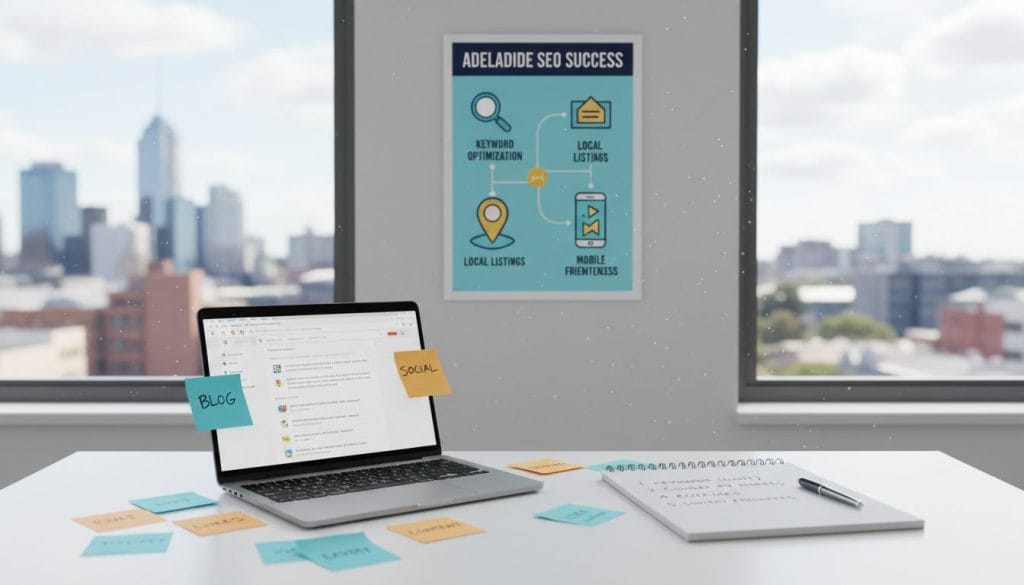
Start with the three signals that actually matter: relevance, proximity and prominence. Nail those and the rest becomes easier to manage.
- Relevance: match service pages to real search phrases people use.
- Proximity: distance matters — make your service area clear and honest.
- Prominence: consistent citations, reviews and a tidy profile lift visibility and trust.
Expect momentum over months, not days
Most businesses see early movement in 4–12 weeks, with stronger gains over 3–6 months. Some improvements take longer, sometimes up to a year, depending on competition and your starting point.
Your Google Business Profile is a frontline asset
Treat your google business profile as the front counter. If it’s messy, customers get confused and your walk-ins and calls drop.
Consistency beats cleverness with citations and reviews
Accurate NAP entries and steady review management build more long-term trust than one-off hacks. That steady approach lifts rankings and improves your online presence.
1) Get your Google Business Profile humming
Do this first: pick the right primary category, add clear services, tighten your service areas, and confirm contact details are correct. A tidy google business profile makes you easier to find and gets more clicks, calls and bookings from nearby customers.
Categories and services — the bits Google actually reads
Categories and listed services are strong relevance signals for Google’s local ranking systems. Pick one primary category that matches your main offer, then add secondary categories and detailed services that describe real work you do.
Photos, posts and Q&A that nudge clicks and calls
Good photos and regular posts don’t always change rankings fast, but they boost conversion — more clicks, more direction requests and more phone calls.
Fix duplicates and incorrect details before they bleed rankings
Find duplicates: search your business name and phone across Maps and directories. Mark duplicates to remove or request ownership, then correct hours, numbers and addresses so every profile matches.
GBP basics checklist (5-minute self-audit)
- Name: consistent across listings
- Address & phone: correct and formatted
- Hours: up to date
- Primary & secondary categories
- Services: listed clearly
- Description, photos, posts, Q&A, messaging, booking link
| Item | Why it matters | Quick fix |
|---|---|---|
| Primary category | Top relevance signal | Choose exact match |
| Services list | Matches user intent | Add service names and prices |
| Photos & posts | Improves clicks | Upload recent images weekly |
If you want a guided checklist, see our Google Business Profile optimisation guide for a step-by-step approach.
2) Make NAP consistency boringly perfect across Adelaide directories
Make your NAP identical everywhere so Google and people see one clear business truth. That simple alignment reduces confusion, boosts clicks and helps search engines trust your listing. No hacks — just careful, repeatable work.
What counts as a citation in Australia? Business directories, industry listings, local associations, your social profiles and the big data aggregators that syndicate NAP all count. Each of these places feeds search engines and online maps.
Common slip-ups that quietly wreck consistency:
- “St” vs “Street” or “Rd” vs “Road” — small but common.
- Suite vs Unit formatting — e.g. “Suite 2” vs “Unit 2”.
- Old landlines or mobile tracking numbers left in some listings.
- Suburb changes after a move, or postcode mismatches.
Clean-up workflow (quick): pick one canonical NAP on your website first. Update your Google Business Profile, then major directories (Yellow Pages, TrueLocal), then niche and industry sites. Log progress in a sheet so you don’t reintroduce errors.
| Step | Action | Why it matters |
|---|---|---|
| Canonical NAP | Set on website footer & contact page | Source of truth for crawlers and humans |
| Primary listings | Update GBP, major directories | High impact on rankings and calls |
| Niche & industry | Correct associations and trade sites | Builds prominence and trust |
Consistent NAP is boring admin that gives real improvements over time. If you want a step-by-step guide, see our citation clean-up and local audit for a checklist you can run this week.
3) Local keyword targeting that matches how people search in SA
Pick phrases people actually type when they need your service, not the ones you hope they’ll use. Start with intent-based combos: service + suburb + optional “near me”. Map each phrase to the right page and stop guessing.
Service + suburb phrases that convert
These match real intent and convert better. Examples:
- concreter Prospect
- dentist Unley
- accountant Adelaide CBD
- car servicing near me
Each phrase signals immediate need—people search with a suburb because they want a nearby appointment or quote.
Avoiding “fat head” keywords that waste time
Fat head terms are high volume but vague and highly competitive. They cost time and often bring low intent traffic.
“Big volume doesn’t equal big value—target intent, not vanity.”
Mapping keywords to pages (one intent per page)
Use one clear intent per page. Don’t make several pages fight the same query. Keep titles and headings focused, add local proof and a contact call-to-action.
- Research: Google autocomplete, Search Console, competitor scan, and customer language from calls.
- Match: map each high-intent phrase to one dedicated page on your website.
- Measure: track queries and refine the strategy monthly.
If you want help mapping this cleanly, see our keyword mapping and optimisation page for a guided approach.
4) On-page optimisation that signals local relevance fast
Make metadata and headings reflect real search intent — that’s the fastest on-page win. Tighten title tags and H1s to include service + suburb, add clear contact cues and an embedded map, and make the mobile experience frictionless for people searching on the go.
- Title tag: “Plumber Glenelg — Emergency & Same-Day Repairs | Business Name”
- H1: “Emergency Plumbing in Glenelg”
- H2: “Services in Glenelg and nearby suburbs”
Location cues checklist
- Embed a Google Map on your contact page.
- Add LocalBusiness schema with NAP, hours and geo-coordinates.
- Show phone and address in the footer, matching your Google Business Profile.
Internal linking — a pub conversation for your site: don’t make Google guess where the important pages are. Link each service page to its suburb pages and vice versa. Use clear anchor text like “car servicing Norwood” so both users and crawlers find the right page.
Mobile friendliness = conversions: add tap-to-call buttons, fast-loading pages, readable fonts and simple forms. Most customers search on the run, so speed and usability turn visits into calls.
Need a deeper technical checklist? See our technical SEO guide for step-by-step site fixes and metadata tips.
5) Build suburb and service-area pages without making thin content
Answer first: only build suburb pages when demand and your ability to serve that area are real — and when you can add unique proof on each page.
When separate pages make sense
Create a page if you regularly work in multiple suburbs, offer a distinct service there, or have verifiable jobs and testimonials from that area. If you cover one tiny zone, or you’d just swap the suburb name and copy the rest, don’t bother.
What a non-thin page needs
- Specific service explanation that ties to the suburb.
- Suburb FAQs answering real customer queries.
- Recent job notes (de-identified), photos and a nearby testimonial.
- Local reference points or landmarks to add geographic context.
Template pitfalls to avoid
Swapping suburb names only, spinning paragraphs or stuffing keywords gets pages ignored. Google and users want helpful content, not thin clones.
| Element | Why it matters | Quick win |
|---|---|---|
| Unique proof | Shows you actually work there | Add one job case and a testimonial |
| Suburb FAQ | Matches search intent | Answer 3 common local questions |
| Internal links | Drives conversions | Link to main service and contact page |
Good pages boost visibility and drive more qualified traffic — they match intent, help customers decide, and make your website work harder for your business.
6) Reviews that lift trust and rankings (without being cringe)
Make it effortless for happy customers to leave feedback, then use replies to show you care. Invite reviews consistently, keep asks short, and treat negative notes as a chance to demonstrate good service.
How reviews affect prominence
Reviews are a real-world signal: more positive feedback and steady activity helps your profile look credible. That credibility boosts click-throughs and can nudge your rankings in maps and local search results.
Simple review flows that work
- SMS after job completion with one link.
- Short follow-up email containing a single CTA and THANK YOU line.
- QR code on receipts or at reception for in-person asks.
- Quick face-to-face ask: “Was everything OK? A short review helps small businesses.”
Non-cringe message template
“Thanks for choosing us — if you’ve got a minute, would you mind leaving a quick review about your experience? It helps other customers and our small business.”
Handling negative reviews
Acknowledge, apologise if needed, then offer to take the conversation offline — give a direct contact. Do not argue in public; a calm reply shows experience and builds trust.
Why bother: reviews drive trust, better-qualified customers, more calls and measurable results for your business.
7) Local backlinks that actually move the needle
Earn a handful of meaningful backlinks from proper Adelaide organisations and you’ll see more traction than from 500 junk listings. Quality links lift your prominence and drive real referral traffic, not vanity numbers.
Adelaide link opportunities
Create link-worthy assets and pitch the right places: local news stories, community sponsorship pages, school and club sponsor lists, chambers of commerce, industry associations, event listings and supplier partner case studies.
What “reputable sites” means in plain terms
Think real audiences and trusted brands — sites with genuine readers, limited outbound links and relevant context. Avoid directories that publish thousands of unrelated links; those add noise, not authority.
White-hat do’s and don’ts
- Do: publish a local guide, a job case study, or support an event that earns a natural mention.
- Do: ask partners and suppliers for case study links or testimonials.
- Don’t: buy links, use private blog networks or spam forums.
Tip: a modest, focused link building strategy beats volume. If you work with an agency, ask for a plan that targets reputable partners and measurable growth for your clients.
| Opportunity | Why it helps | Quick approach |
|---|---|---|
| Local news | Editorial links & audience | Pitch a timely story or community angle |
| Sponsor pages | Trusted community links | Support a club or school and request a credit link |
| Supplier case study | Relevant, industry context | Offer to write a joint case study with a supplier |
Tracking performance: know what’s working before you spend more
Measure the bits that pay the bills — not the ones that just look pretty on a dashboard. Focus on calls, bookings, quote requests and direction taps as the real signals of campaign success.
Google Business Profile insights to watch
Open your google business profile and note four core metrics: calls, website clicks, direction requests and photo views. Each metric ties to actions you can influence — hours and posts affect clicks, photos and reviews nudge clicks and direction taps.
Tools for rank and listing checks
BrightLocal for detailed rank tracking and citation audits. for listing health and syndication checks. Semrush for search trends, competitor moves and campaign reporting.
Lead tracking basics and reporting cadence
Use call tracking carefully, tag form submissions and add UTM parameters on GBP links so you know which campaign delivered which leads.
Reporting cadence: weekly quick checks, monthly performance reports, quarterly strategy tweaks.
“Working” means steady improvements in calls, bookings and quoted jobs — not flashy traffic spikes.
| What to track | Where to check | Typical trigger for change |
|---|---|---|
| Calls & direction taps | GBP Insights, call-tracking | Hours, photos, review replies |
| Website clicks & enquiries | Analytics + UTM tracking | Title tags, pages, landing forms |
| Rank & listings | BrightLocal, Moz Local, Semrush | Citations, backlinks, on-page edits |
How long local SEO takes in Adelaide (and why)
Small fixes can show up on reports quickly; bigger prominence gains take patience. That’s the practical view — no hype, just timelines you can plan around.
Typical timeframe: early movement vs reliable gains
Expect early movement in 4–12 weeks: simple Google Business Profile updates, hours and photos often show visible improvements within weeks (Bobo source).
Stronger, reliable results usually arrive over 3–6 months as reviews, links and on-page work stack up. Full prominence lifts can take up to a year or more in crowded markets (DGreat; Source 1).
What changes the clock
Three big drivers set the pace:
- Competition: a busy suburb or industry pushes timelines out.
- Website condition: slow, poorly structured sites slow results.
- Existing presence: messy listings add repair time; a clean online presence speeds things up.
2026 expectation setting
More businesses are investing in seo this year, so sloppy setups fall behind faster. Good execution still wins, but there are no guarantees — focus on controllables: relevance, proximity and prominence.
Quick tip: local seo compounds — each consistent month of work makes the next month easier. Plan for steady effort, track leads, and measure the real results that matter.
Proof and credibility bits: stats, one client win, and an expert quote
Proof beats promises; below are sourced stats, a client outcome, and a simple comparison to help you pick the right path.
Quick, source-backed stats
Early movement often appears in 4–12 weeks after profile and page fixes. (DGreat)
Stronger, reliable gains usually arrive in 3–6 months, with full prominence sometimes taking a year or more. (DGreat; Source 1)
Small GBP changes — hours, photos or a corrected phone — can show measurable improvements within weeks. (Bobo)
One client result
One Adelaide trades client saw a 42% lift in calls from their profile within 10 weeks after cleaning NAP, adding service pages and generating three local testimonials.
That outcome drove more qualified enquiries and booked jobs, not just clicks.
“Accuracy and helpful content are primary — keep your profile correct, collect steady reviews, and show proof of work.”
DIY vs contractor vs agency — quick comparison
| Approach | Cost | Time & speed | Risk & control |
|---|---|---|---|
| DIY | Low cash cost, higher time cost | Slow to moderate; depends on your hours | High control, higher risk of mistakes without tools |
| Contractor | Moderate cost | Faster than DIY; depends on contractor availability | Shared control, moderate risk; limited tools access |
| Agency | Higher cost | Faster and steady progress with reporting | Lower risk, full tools and wider experience; less day-to-day control |
Pick the lane that fits your time and tolerance. If you want a hand, book a free audit at loudachris.com.au — no hard sell, just clear steps to better results.
Conclusion
Wrap this up with three practical moves you can actually do this week. Start with your Google Business Profile, tidy your NAP entries, then map one high-intent keyword to a dedicated page. These simple actions make your website and profiles work together to drive calls and bookings.
Recap of the seven tips: fix your profile, make NAP boringly accurate, target real keywords, tighten on-page signals, build only useful suburb pages, collect and reply to reviews, and earn a few quality backlinks. Then track calls, direction taps and form enquiries and iterate.
Yes, you can get wins without a website using profiles and directories, but a good website converts visitors and supports stronger rankings and content over time.
FAQ
Is local SEO free? — There are free moves: update your profile, fix NAP and ask for reviews. Paid tools or expert time speed the job and scale tracking, but basic improvements can cost little cash.
How long does it take in Adelaide? — Expect early movement in 4–12 weeks for profile fixes; reliable gains in 3–6 months once reviews, links and pages build up.
Do I need a shopfront? — No. Many service businesses rank and get calls from a service-area profile. A physical address helps trust for some searches but it’s not mandatory.
What’s the fastest win? — Correct contact details and hours on your profile. It’s boring, quick and it lifts calls fast.
How do I track it? — Use GBP Insights for calls and direction taps, add UTM tags for clicks, and log leads in a simple sheet or analytics tool.
Make it boringly accurate, then let it compound. If you want a hand, Book a free audit at loudachris.com.au.
FAQ
What exactly will my business get from a focused local search strategy?
How long does it take to see results from optimisation?
What should I focus on first to get the biggest impact?
What are the essential Google Business Profile elements I must get right?
How strict do I need to be with name, address and phone across directories?
How do I choose the right keywords without wasting time on broad search terms?
Should I create separate pages for every suburb I serve?
How do reviews affect my visibility and leads?
Where should I look for worthwhile backlink opportunities?
What metrics should I track to know the campaign is working?
Can I handle this myself or should I hire an agency?
What common mistakes slow down progress the most?
How do I make sure my website signals local relevance quickly?
Do I need a specific toolset to track local rankings and performance?
Will changes to my site or profile harm my current rankings?

Chris Lourenco is the director of Loudachris Digital Marketing, an Adelaide-based SEO, Google Ads, and web design agency. Chris excels in crafting bespoke, results-driven strategies that help businesses get more traffic, leads and sales.