
Quick reality check: Google now serves “good enough” answers right in the results, so the old chase-for-clicks game has shifted. The ABC noted on 14 Oct 2025 that Aussie sites saw major referral drops after these on-page answers, so it’s time for a new playbook.
You’re the hero here — tradies, clinics, cafés and professional services who win in their suburb. I’m the guide, and I’ve seen these patterns across Adelaide and beyond — call me Loudachris for short. We’re not doing theory; this is practical.
This is a seven-part listicle with direct actions that move the needle: map actions, calls, bookings and trust signals. Expect fewer website visits, but more people arriving already pre-sold. That shifts the way you measure visibility and ROI.
Each of the seven sections starts with a direct answer, then evidence and quick steps. Skim-readers will still win — you can jump in, pick one tactic, and use it today to boost foot traffic and conversions.
Key Takeaways
- On-page answers are cutting referrals — adapt your playbook now.
- Focus on maps actions, calls and bookings, not just clicks.
- Expect less traffic but higher-quality, pre-sold enquiries.
- Practical steps follow in each numbered section for quick wins.
- This suits tradies, clinics, cafés and local professional services.
What’s actually changed in local search since AI answers took over
People now get short, direct answers up top, then act — often without ever visiting your site. That matters because over a third of searches in Australia returned a summary in late 2025, cutting clicks to traditional links.
So what does the page look like now?
From blue links to action-first results
Three things run the page: short summaries at the top, a Maps pack doing the heavy lifting, and fewer eyeballs on organic listings.

Why users behave differently
- Good-enough answers: people pick a place, call or get directions, and skip websites.
- Ecommerce still needs browsing and checkout; local often ends with a phone call or booking.
- The new battleground is entity understanding and trust — being the obvious, reliable choice.
“If your online info is messy, the system will repeat it confidently, and you bear the fallout.”
Quick tip: tidy your listings and consistency across the web. For an easy audit and practical help, read why this matters.
Key takeaways for busy local business owners
Skip the fluff: this is what matters for foot traffic, calls and bookings.
- Expect fewer website clicks, but more high-intent enquiries — industry estimate from SunCoast Media suggests filtered visitors convert about 4.4x more often.
- Your authority now fuels rankings: consistent info, real expertise and corroboration beat old keyword tricks.
- Google Business Profile and Maps are where actions happen — calls, direction requests and bookings can happen without a site visit.
- Revise reporting: track leads, calls and actions, not just sessions, so you measure what actually moves the needle.
The visibility shift is fewer clicks but higher intent. Measure actions, not vanity metrics.
The trust shift means clear profiles, reviews and consistent NAP are the signals that matter.
The action shift is obvious — focus on maps listings, quick-call options and easy bookings so customers convert before they ever open your website.
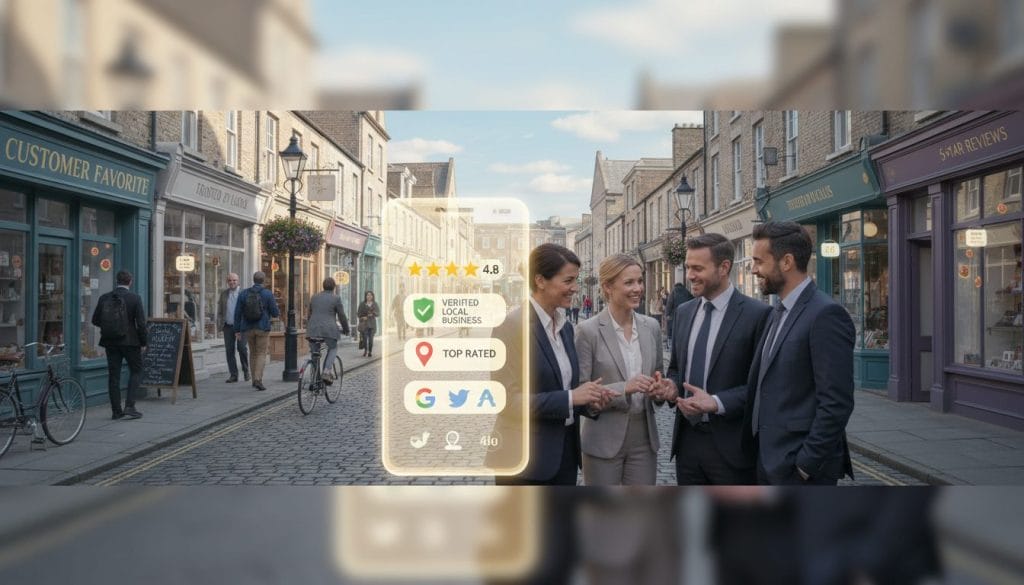
“Next up: seven practical moves — one per section — to lock in more calls and bookings.”
AI changing local business search: less traffic, more “pre-sold” visitors
A big fall in web visits looks alarming, yet most of that traffic was low-value browsing.
The ABC reported big referral drops across Australia. Darren Woolley noted traffic plummets of around 80% on some pages after summaries appeared. Elliot Dean found click-throughs for pages with an overview fell between 15% and 70%.
What “valuable clicks” look like
Valuable clicks are visitors who come after an overview or citation and are already ready to call, book or request a quote. They convert at a far higher rate than casual browsers.
How to reset reporting in 2026
- Watch impressions, not just sessions.
- Track GBP actions, calls, form fills and booking starts.
- Measure qualified leads and booked jobs, not pageviews.
“Don’t cut the content that builds authority — that’s what triggers brand queries.”
| Metric | Old focus | New focus |
|---|---|---|
| Sessions | Primary KPI | Contextual indicator |
| Impressions | Low priority | Shows visibility in summaries |
| Calls / Bookings | Secondary | Primary lead metric |
Quick warning: panicking and stripping content damages authority. Keep building clear, local information that earns citations. Next up: how to win the Maps and profile surfaces where people act.
1) Micro-local and hyperlocal Maps results are rewriting “near me”
Near me is now implied — Maps rankings flex by context such as time of day, traffic conditions and recent user behaviour, not just distance. That means your place can rise or fall street-by-street depending on what people nearby did an hour ago.
Data from SEO Perth Experts (2026) shows modern Maps considers minutes of the day, real-time busyness, device location and how popular a spot is with nearby users.
Why proximity isn’t the whole story
Context means simple things: the time of day you’re viewed, whether the main road is busy, and which user journeys were completed nearby.
Street-by-street ranking — an Adelaide example
On a quiet weekday morning a cafe on one side of the street may outrank a competitor two blocks away because it shows recent visits and fresher photos. By late afternoon, those positions can flip when traffic and footfall patterns shift.
Micro-market dominance without suburb spam
Don’t build dozens of copy-and-paste suburb pages. Focus on genuine signals that prove you serve the immediate area.
- Service area clarity — list streets and suburbs you truly cover.
- Suburb mentions — only where relevant and specific.
- Local proof — recent projects, photos and community partners.
- GBP freshness — update hours, posts and services often.
If Maps is the battleground, your Google Business Profile is the front door — next we’ll cover how to make that profile your homepage.
2) Your Google Business Profile is the new homepage (whether you like it or not)
1. Direct answer: Treat your google business profile like your homepage — for heaps of local queries it is the first place people act, not your website.
Zero-click results mean calls, direction requests and bookings happen straight from the listing. SunCoast Media found that by 2026 more than 40% of users interact in Maps results without visiting a site.
GBP fields that matter:
- Primary and secondary categories — make them accurate.
- Service list and product entries — name real services.
- Business description, service areas and opening hours.
- Regular posts and fresh photos — they feed algorithms and people.
Keep it alive: weekly photo uploads, fortnightly posts, a monthly services audit, and immediate hours or availability updates for holidays. SEO Perth Experts notes dormant listings look abandoned to both algorithms and users.
Practical hits: add booking links for appointments, list products for clinics or retail, and seed Q&A with real questions and answers. For a step-by-step guide, see Google Business Profile optimisation.
| Action | Cadence | Why it helps |
|---|---|---|
| Photo uploads | Weekly | Keeps listing fresh and attracts clicks or calls |
| Posts | Fortnightly | Signals activity and promotes offers |
| Service audit | Monthly | Ensures categories and services match reality |
3) AI Overviews and AI Mode: how to earn citations instead of crying about clicks
Direct answer: You can’t stop overview boxes, but you can make your content the one they cite — and still get the calls and bookings that matter.
What triggers summaries vs what drives clicks
Research from the ABC shows summaries mostly come from informational queries — think “how do I”, “what is”, or “what does it cost”.
High-intent queries — people who want a quote, a booking or directions — still trigger click-throughs and actions more often.
Format for quoteable pages
- Lead with a short answer in the first 2–3 sentences.
- Use clear H2/H3s, numbered steps and short paragraphs.
- Add concise lists and plain-language definitions so snippets can copy cleanly.
Authority signals to include
- Consistent NAP and opening hours across listings
- Author bylines or credentials on service pages
- Real project photos and short review excerpts
- Third-party corroboration — licences, associations, media mentions
Internal link plan: build a “Start here” hub that links to key service pages and genuine suburb pages. Keep links tight and topical — for example, point to a “Local SEO services” page and an “SEO strategy” explainer so readers (and summarizers) find structured, trustworthy information.
| What to put on the page | Why it helps | How often to update |
|---|---|---|
| Short direct answer at top | Gets quoted in summaries | On creation/major change |
| Numbered steps and H3s | Easy for systems and people to parse | Quarterly review |
| Credentials, photos, reviews | Builds trust and corroboration | Monthly refresh |
“SunCoast Media: tidy, structured content is now a visibility opportunity — not just a traffic play.”
Quick tip: aim for pages that teach briefly, prove expertise, then link to a booking or contact action. That way you win citations and real enquiries.
4) Branded search is a bigger deal now (people searching your name)
Getting more people to search your name is one of the cleanest trust signals you can earn. That simple action proves recognition, cuts ambiguity and helps algorithms link your entity to services and locations.
Why branded queries matter
Branded searches show real-world awareness — people who know you are likelier to call or book. SunCoast Media found branded search is a growing relevance signal for AI-powered systems.
Easy, non-cringe brand plays
- Signage that exactly matches your listing name — on the door, van and receipts.
- Consistent uniforms or vehicle logos so people remember your name when they later do a search.
- Sponsor a local club, run a stall or show up at markets — be visible where people already are.
Content that builds recall: short local guides, “behind the scenes” project posts and plain “what it costs” explainers in your voice. Keep the name identical across GBP, website, ABN listings and socials so systems don’t split your identity.
“Watch branded impressions in Search Console and GBP discovery queries — they tell you whether your actions are turning into real recognition.”
5) Voice and conversational search: optimise for messy human questions
Direct answer: write for how people actually speak when they ask for help — voice queries are longer, more specific and packed with intent.
How people ask by voice vs type, and what that means for page structure
Typed queries are short: think “plumber adelaide”. Spoken queries are full sentences: “Who can fix a leaking tap near me right now?”
SEO Perth Experts (2026) claim over 50% of local search queries now come via voice, so reflect that language on key pages.
Turning customer questions into FAQ-style sections on key pages
Simple page structure to add to each service or suburb page:
- Quick answer (1–2 sentences).
- Pricing range or factors that affect cost.
- Service area and what you cover.
- Process steps and expected timing.
- What to do next — clear CTA (call, book, or request a quote).
Add 3–5 short FAQ items per service page, using real language from calls and emails. Keep them contextual and updated — don’t dump one giant site-wide FAQ that goes stale.
Practical tip: use conversational headings as H3s, include relevant keywords naturally, and link to a Loudachris on-page optimisation resource for deeper how-to steps.
“Write like a helpful mate on the phone — short answers, plain language, and one simple next step.”
6) Reviews are being summarised by AI, so reputation needs a new playbook
Direct answer: reviews aren’t just stars anymore — platforms read the words, spot patterns and freshness, then summarise what people say about you.
What systems infer from review language and timing
Google-like tools pull recurring themes: service types, staff names, turnaround times, price fairness and sentiment swings. SEO Perth Experts (2026) found summaries often quote short phrases like “great coffee but slow service”.
Review velocity playbook
- Ask at the right moment — after a completed job or happy call.
- Make it easy — direct link, short prompt, one-step flow.
- Aim for steady flow — small, regular bursts beat one big batch.
Responses that actually help trust
Reply like a person: reference the service, the suburb and a specific detail, then offer a next step. For example: “Thanks, Jess — glad the new tap in Glenelg is sorted. If it leaks again call Sam on 0412 345 678 and we’ll sort a return visit.”
“SunCoast Media: active GBP and strong reviews correlate with more enquiries.”
Client result: An Adelaide home services client increased enquiries after improving review request cadence and posting weekly GBP updates for 8 weeks.
Compliance note: never gate reviews or offer dodgy incentives — keep requests honest so reviews help your visibility and long-term marketing.
For hands-on help with review prompts and profile activity see our optimisation guide.
7) What to measure now: a simple scoreboard for AI-era local SEO
Measure what makes money: calls, bookings, direction requests and qualified leads replace sessions as the primary KPI for seo and local seo owners today.
Classic local SEO vs AI-driven local discovery
| Focus | Classic local SEO | AI-era local discovery |
|---|---|---|
| Primary metrics | Rankings, clicks, sessions | GBP actions, branded demand, citations |
| Lead quality | Unknown volume | Pre-qualified calls & bookings |
| Reporting cadence | Weekly traffic spikes | Monthly trend lines with annotations |
| Revenue link | Difficult to tie | Directly tied to booked jobs and quotes |
KPIs that still matter
- Calls and bookings — count and close rate by service type.
- Direction requests — proxy for in-store visits.
- Website clicks from GBP — track which pages convert.
- Form fills / quote requests — lead qualification data.
Where to pull evidence
Use GBP Insights for actions, Search Console for impressions and branded vs non-branded query mix, and on-page engagement to spot the valuable clicks that turn into work.
“Then traffic dropped off around 80 per cent.”
Mini reporting template: monthly trend lines, annotate new posts, review bursts and service updates, and focus on revenue outcomes not raw traffic.
Conclusion
Conclusion. The practical playbook wins: Maps gets hyperlocal, your Google profile becomes the storefront, AI overviews reward clear structure and authority, brand queries matter more, voice queries need plain answers, reviews are summarised, and measurement moves to actions.
Reassurance: this isn’t the end of seo — it’s the end of lazy seo and the start of clearer, more human marketing that systems and people both trust.
Next 7 days: update GBP categories/services/hours, post fresh photos, reply to recent reviews, add 3 FAQ blocks to a key service page, and fix NAP consistency.
FAQ
Is SEO still worth it for local businesses in Australia in 2026? Yes. Good seo and consistent information keep you visible where people act. Focus on actions — calls, bookings and direction requests — rather than raw web sessions.
Should I bother with suburb pages if Maps is hyperlocal? Keep only useful, specific suburb pages. Quality content that proves real service and local proof beats dozens of copy‑paste pages.
How do I get into AI Overviews without writing a 3,000‑word essay? Lead with a short answer, use clear headings and numbered steps, then add credentials and concise proof so systems can quote you.
What should I track if my impressions rise but my sessions fall? Track GBP actions, calls, bookings and qualified leads — those are the measures that link directly to revenue, not just site visits.
If you want a clear plan for your suburb and services, Book a free audit at loudachris.com.au — happy to help.
FAQ
How has AI affected the way customers find local businesses?
Why are fewer people clicking through to my website even when impressions rise?
What should I change on my site so AI will quote or cite it?
Is proximity still the main factor in Maps rankings?
What parts of my Google Business Profile matter most now?
How do reviews affect AI summaries and rankings?
Should I focus more on branded search now?
How can I optimise for voice and conversational queries?
What metrics should I track in the AI era?
How do I adjust reporting when AI increases impressions but reduces referral traffic?
Can I still win featured snippets and summaries?
What quick wins should a busy owner do this week?

Chris Lourenco is the director of Loudachris Digital Marketing, an Adelaide-based SEO, Google Ads, and web design agency. Chris excels in crafting bespoke, results-driven strategies that help businesses get more traffic, leads and sales.