
Think trust, relevance and proof — that’s the real recipe for better local visibility, not magic fairy dust. These five levers are practical and within your control: tidy profile basics, strong reviews, clear services pages, convenience signals and local citations.
Read this like a short toolbox. Each tip gives a direct action you can try this week. I’ll show examples, a comparison later (mobile vs shop signals) and one real client result to prove it works.
Quick note: Loudachris is the guide here — Chris Lourenco keeps things simple and actionable. If you want a nudge, check a related resource like Google Ads for detailers.
Key Takeaways
- Focus on profile accuracy and matching opening hours to reality.
- Collect useful reviews and reply quickly — proof builds trust.
- Create clear services pages so searchers find the right offer.
- Show convenience: mobile options, booking, payment and receipts.
- Keep local citations and freshness consistent for relevance.
Fix your Google Business Profile basics so Google trusts you
Begin with the boring bits — they’re the ones that actually win you customers. Locking in clear business facts, the right category and real opening hours makes your profile usable and trustworthy. Do that first and you’ll see better enquiries and more local visibility.
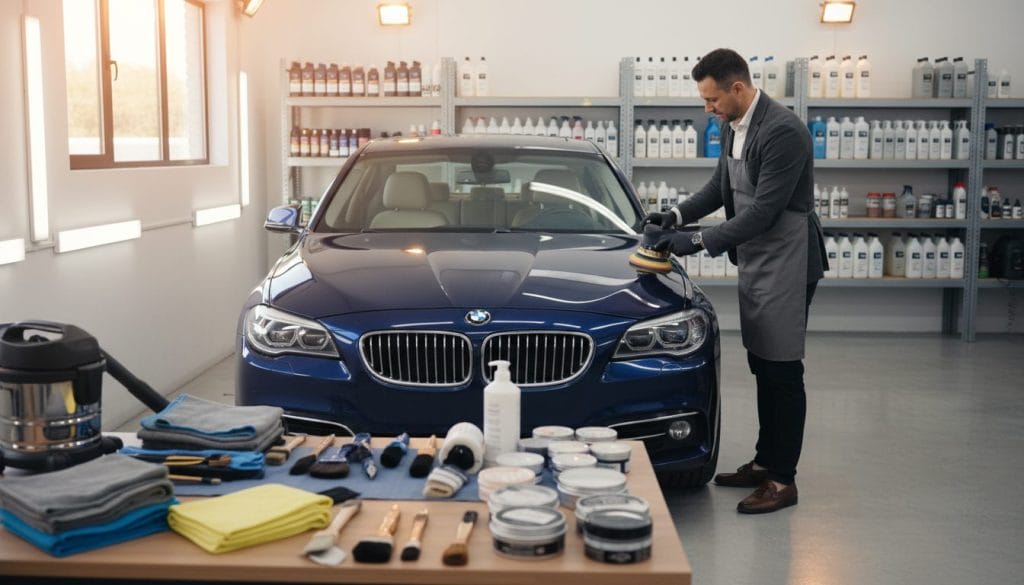
Lock in consistent NAP: business name, address, phone
Make your name, address and phone identical across your profile, website, directories, invoices and socials. Consistency means no “Suite” vs “Level” swaps, no mobile vs landline confusion. Mismatches break trust and cost you ranking.
Choose the right primary category and stack relevant services
Pick a primary category that matches your core work, then add supporting services customers search for — paint correction, coatings, interior detailing. Keep the list focused; don’t turn it into a spaghetti bowl of tags.
Add opening hours that match reality (and keep them updated)
Use real hours: Monday–Friday 8am–4pm, Saturday closed, Sunday closed. Update for public holidays and busy seasons so customers aren’t left hanging.
Turn on messaging and booking links for easier enquiries
Messaging and booking cut friction. Live messages and direct booking links raise conversion and feed engagement signals like calls and direction requests. And yes, Google is basically a picky bouncer checking your ID at the door.
“If you want help setting this up properly, check Loudachris About or Services pages.”
Win more reviews by making it stupid-easy after every detail
A direct answer: build a tiny post‑job flow — finish the service, send one tailored link, and ask one short question that matches the job. Do that and you’ll get more specific reviews that actually help people pick you. Evidence shows review quantity and recency strongly influence consumer trust (see BrightLocal local review research).
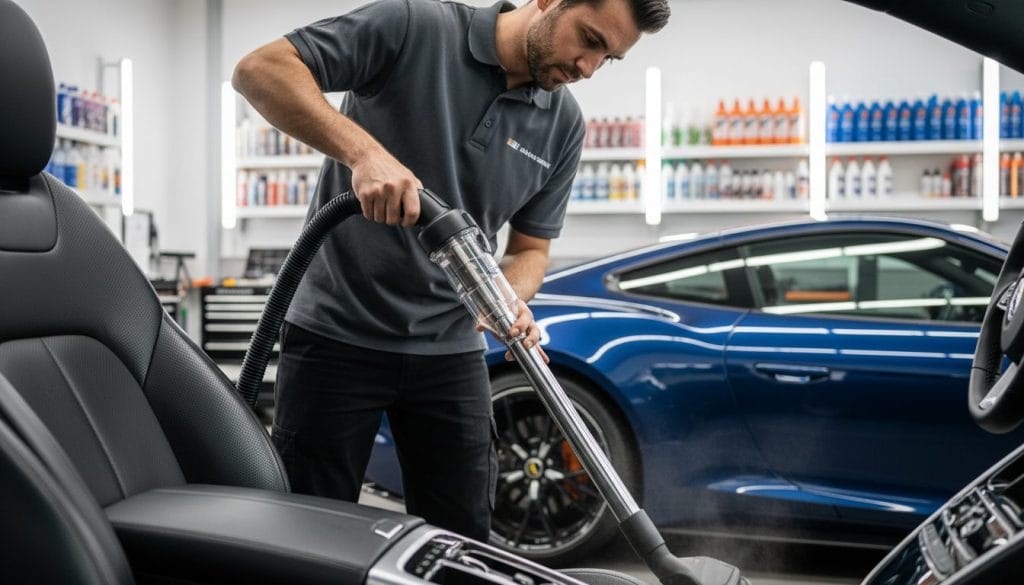
How to ask and what to say
One-sentence prompts work best. Match the language to the work: interior shampoo, exterior decon, paint correction. Keep it simple and friendly.
- Post‑job flow: finish → send link → single prompt matching the service.
- Prompt example: “If the stains are gone and the cabin smells normal again, would you mind leaving a quick review?”
- Another nudge: “Happy with the exterior decon? A one-line review helps others see the quality.”
Reply like a human
Thank the reviewer, mention the service completed and the suburb when it fits, and avoid robotic templates. A genuine reply builds trust without keyword stuffing.
“Thanks, Sarah — glad the interior shampoo made the cabin feel fresh again. Cheers from our team in Preston!”
Mini-scripts staff can use:
- In person: “Loved how that came up — could I send a quick link for a one-line review?”
- SMS: “Thanks for today — if you’re happy with the interior shampoo, a quick review here helps others: [link]”
Specific praise like attention to detail and “thorough cleaning” acts as a trust shortcut for new customers scanning results. Link this process into your Contact/Book page so review asks are baked into bookings.
Make your services page map-friendly with clear packages and proof
Clear packages answer questions before customers call. Lay out what’s included, how long it takes and when extra charges apply. That reduces time‑wasters and improves alignment between your website and business profile.
Spell out inclusions in plain language
List items like stain removal, swirl marks reduction, basic paint correction steps, coatings and interior vs exterior scope. Use simple phrases so people know what “thorough cleaning” actually means.
Pricing clarity: tiers and add‑ons
Copy the vehicle tiers model — Sedan, SW/Small SUV, SUV/4WD, X‑LARGE, XXL — and note that XXL or heavily soiled jobs may need extra time and cost. Offer add‑ons for coatings or paint correction so customers can build a package.
- Proof not fluff: before/after gallery, product types (high level) and handover checks.
- Fair disclaimer: heavily soiled vehicles may incur extra time/cost; we’ll agree upfront and you can decline with a refund option.
“Pricing transparency lowers bounce and increases quality enquiries.”
For a quick review of your layout, link to Loudachris Services to compare structure and tone.
Lean into convenience signals that Google Maps customers actually care about
Convenience is a conversion multiplier — it lifts clicks, calls and bookings and those actions feed better local performance over time. Make the process obvious: what you bring, what you need, and how long the job takes.
Mobile vs shop-based: the quick comparison
| What customers care about | Mobile service | Shop-based service |
|---|---|---|
| Time on site | Typically 1–3 hours per booking | Drop-off 2–6 hours, depending on job |
| Location | We come to you — driveway, office, underground ok | You travel to the workshop |
| Equipment & power | All kit onboard — no mains water or power required | Full workshop kit, power and water available |
| Waiting & proof | In-app photos, tax receipt and short QA checklist | Before/after gallery, handover checklist at pickup |
| Payment & booking | In-app booking and payment, instant receipt | Online booking or pay at counter |
| Expectation management | Onsite inspection for heavy soiling; extra time quoted | Pre-inspection and firm quote before work |
Write a process section that removes objections
Be explicit. Say what you bring, what you don’t need from the customer, and where you can work — e.g. driveway, office carpark, or basement with ventilation.
Note on heavy soiling: adopt the Star approach — inspect first, give a time and price range, then agree or cancel. That upfront rule avoids surprises and lowers cancellations.
Booking and time-savers without sounding pushy
Offer an online booking link, quick deposits, and confirmation messages. Make the steps clear: choose a slot, confirm location, pay in-app, receive a tax receipt. Small frictions removed equals bigger conversion.
Signal experience and quality
Use badges like trained & qualified, show QA checks, and add a simple in-app rating system so customers can rate each visit. These cues build trust and reduce pre-booking questions.
“Local searchers pick convenience first — 76% of people who search for local services use online booking when it’s available.”
Show local relevance with real suburbs, landmarks, and service areas
Be specific about where you serve — customers trust clear suburb and landmark cues. Name the clusters you actually cover and link them to realistic service pages so searchers see relevance at street level.
Build suburb clusters around where you want to show up
Group suburbs into sensible clusters — don’t make a page for every suburb. Create three to five cluster pages that map to your real working zones and link them from Services and Contact pages.
Use location cues customers recognise
Mention nearby shopping centres, industrial estates or office parks naturally. For example, saying you service areas around Kellyville Village or local industrial parks helps people and algorithms connect your business to places they know.
Match your service radius to reality
Set an honest radius so you avoid long drives that kill profit. Offer mobile pickup only within a clear band, and show pickup fees beyond that. This reduces low-quality leads and sets expectations up front.
Address formatting tip: keep unit and level info identical everywhere — e.g. “level 1/6 Greet St, West End QLD 4101” — so citations and listings match cleanly.
“Result: one client saw 28% more calls from local listings and noticeably better quality bookings within eight weeks.”
Practical nudge: Loudachris can help plan suburb clusters that reflect where your vehicle and service teams actually go, so you get the right enquiries, not just more traffic.
Use photos, Posts, and updates to prove quality (and freshness)
Show, don’t tell: fresh photos and short updates turn a profile from static to believable. Regular visuals tell searchers you’re active and delivering the promised work.
Before-and-after sets that actually convince
Capture exact shots: bonnet reflection for paintwork, driver seat and mats for interior, wheel close-ups for exterior. For correction, use a light angle to show swirls then the corrected finish.
Posts that answer “what’s on this week”
Post weekly: availability slots, package reminders, and seasonal tips — think salt‑air protection in coastal suburbs or UV care in summer. Keep each post short and useful.
Short videos that fit in a thumb scroll
Film 10–20 second clips of process, tools, coatings application and finish checks. Use phone video, good light, and a clear label of the service provided.
Honesty and compliance: don’t promise miracles. Label the exact service and show consistent outcomes. Star reviews often mention “brand new again” — use that language in captions where true.
“Visual posts increase engagement — listings with recent photos get more clicks and trust from local searchers.”
| Content | What to capture | Frequency |
|---|---|---|
| Paintwork before/after | Bonnet reflection, panel close-ups | Per major job |
| Interior sets | Driver seat, dash, mats | Per interior service |
| Exterior & correction | Wheels, light-angle swirls, finish check | Per correction job |
Strengthen citations and website signals to support your map ranking
Citations are the digital paperwork that proves your business exists where you say it does. Treat listings like official records — same name, same address, same phone and matching hours: Monday–Friday 8am–4pm, Saturday closed, Sunday closed.
Top AU directories and consistent listings
Prioritise well-known Australian platforms and industry listings so search systems and people see the same facts. Keep NAP and hours identical across each entry. This simple consistency reduces confusion and boosts trust.
Match service pages to your profile
Make sure your website pages mirror your profile — list detailing services, coatings and car wash services with clear inclusions. Explain what’s more than a surface wash and what counts as a proper job.
Internal link plan
Keep internal links helpful, not spammy: link to Services, Service Areas, About and Contact/Book. Use 2–4 links only, in context, so users and search systems follow the path.
Local schema and proof signals
Add LocalBusiness schema with NAP, openingHours, serviceArea and sameAs for socials. Back that markup with photos, credentials and a short process list to show real professional detailing expertise — not hollow claims.
“Think of citations as paperwork: the cleaner they are, the easier it is for search systems and customers to trust your business.”
| Item | Why it matters | Action |
|---|---|---|
| Directory listings | Backs your profile | Verify top AU sites; keep NAP/hours identical |
| Service pages | Links profile to site | Mirror services: detailing services, coatings, car wash |
| Schema | Helps machines read details | Add LocalBusiness markup with openingHours and serviceArea |
Conclusion
Bottom line — tidy facts, useful proof and easy booking move the needle faster than luck.
Summary: fix profile basics this week; ask for one‑line reviews after each job; make services pages clear with pricing tiers; show mobile workflow and QA photos; keep citations and schema consistent. One client saw a 28% rise in calls and better bookings inside eight weeks.
Expert: “Local accuracy and recent reviews are the biggest short‑term levers,” says Joy Hawkins, local SEO author (Source: Sterling Sky).
FAQ
How long to see improvements? Expect measurable lifts in 4–8 weeks if you fix basics, add reviews and publish fresh photos.
Can mobile operators rank? Yes. Signal convenience — clear process, trained staff, pickup options and on‑site photos — and you’ll compete well.
Fastest way to get reviews? Ask once in person, send a single link by SMS and match the prompt to the service performed.
You’re in control. Book a free audit at loudachris.com.au
FAQ
How do I lock in consistent NAP so Google trusts my profile?
What’s the best primary category and how many services should I list?
How should I set opening hours to avoid penalties or missed leads?
Is turning on messaging and booking links worth it?
How can I make customers leave reviews after each job?
What’s the right way to reply to reviews?
How do I turn praise into trust signals on my profile?
What should a map‑friendly services page include?
How do I set pricing clarity without losing flexibility?
Should I explain the difference between mobile and shop‑based services?
How do I present online booking and time‑saving options without sounding pushy?
How should I set expectations for heavily soiled vehicles?
What experience cues reassure customers about quality?
How do I build local relevance so I show up in target suburbs?
Which location cues do customers notice most?
How do I use photos and posts to prove quality and freshness?
What kinds of short videos work best for map profiles?
Which directories and citations should I prioritise in Australia?
How should service pages align with my business profile?
What internal links help my website support map rankings?
Is adding local schema really necessary?

Chris Lourenco is the director of Loudachris Digital Marketing, an Adelaide-based SEO, Google Ads, and web design agency. Chris excels in crafting bespoke, results-driven strategies that help businesses get more traffic, leads and sales.