
If you want more calls, your clinic must show up where people search first — especially in map listings and nearby search results. This short 2026 guide gives seven practical steps that move rankings, visibility and bookings, not marketing fluff.
Why care? Nearly half of Google searches look for nearby info and 99% of people use the internet to find businesses. That matters for a chiropractic practice aiming to attract new patients through a better website presence and targeted seo work.
I’m Chris Lourenco from Loudachris Digital Marketing in Adelaide — I’ll guide you, not sell to you. In seven clear steps you’ll get Google Maps optimisation, star reviews and reputation tactics, suburb pages, solid citations, focused content, technical fixes plus schema and backlinks, and simple tracking with a 30‑day plan.
At the end there’s a soft offer for a free audit if you want a quick check — no pressure. If you’d like a deeper dive, check this practical service page for more detail: digital marketing for chiropractors.
Key Takeaways
- Show up in maps and search to convert more calls into bookings.
- This 2026 guide focuses on tactics that actually lift visibility and patients.
- Seven steps cover Maps, reviews, suburb pages, citations, content, tech and backlinks.
- There’s a simple tracking plan and a 30‑day action list to get started.
- Chris Lourenco from Loudachris guides the process — you stay in control.
Key Takeaways
Quick wins that move the needle. Focus on practical tasks that lift visibility and bring real patients through the door.
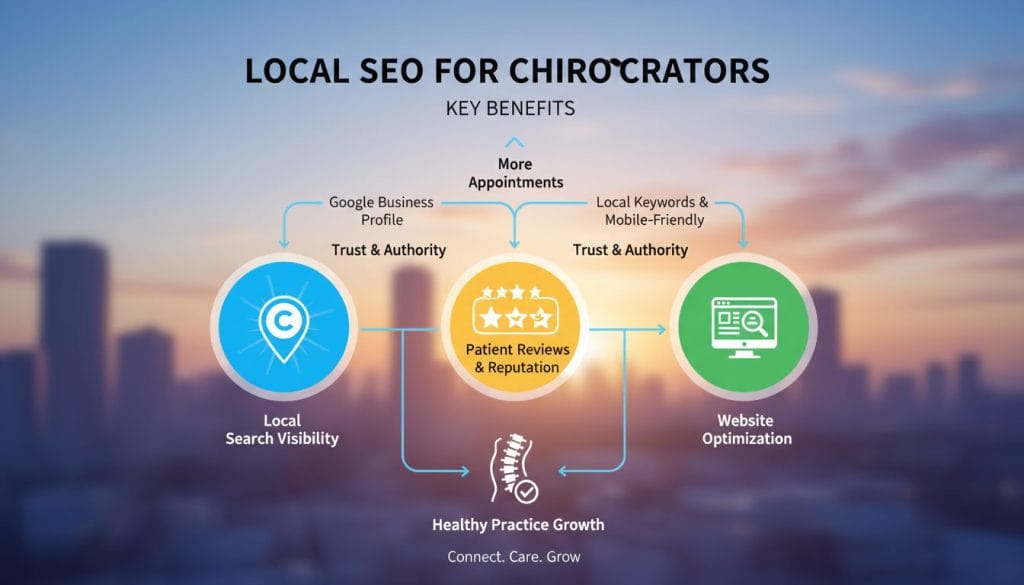
- Win the “near me” moment: tighten your Google Business Profile so you compete in google maps without dodgy tricks.
- Build suburb-first pages: match search intent with pages that attract traffic that converts into new patients, not just views.
- Turn reviews into a conversion engine: 84% of people trust online reviews like friends—use that trust to convert clicks into calls.
- Fix mobile-first technical issues: over half of searches happen on phones, so speed and usability matter for rankings and bookings (Statista).
- Measure what matters: track calls, bookings and direction requests so your seo strategy delivers potential patients, not just screenshots.
Use this list as your 30‑day checklist — start with the GBP clean‑up and measure real outcomes.
What local searchers actually do before booking a chiropractor
Most patients decide long before they ring — and it usually starts in a map or search box.
People bounce between google maps and normal search results, checking ratings, distance, photos and the open now cue. They compare a few profiles, tap-to-call, or ask for directions — often without ever visiting your website first.
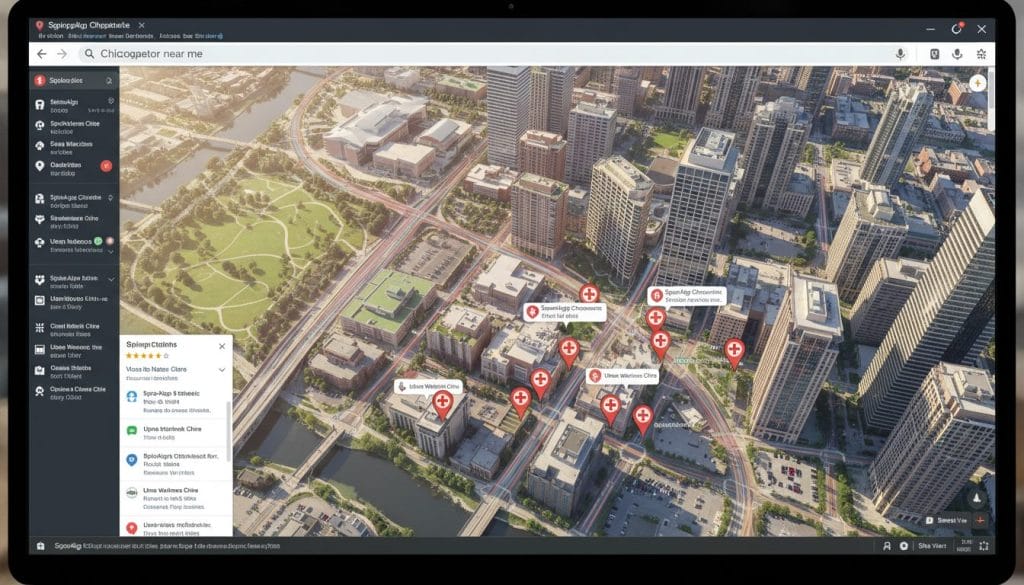
Mobile devices handle over 50% of searches, so tap targets and speed matter. If your site is slow or hard to use on a phone, potential patients will pick the next, easier clinic.
- High-intent modifiers Aussies use: suburb names, “open now”, “same day”, bulk-billing style phrases, and pain queries like sciatica or back pain.
- When someone adds a suburb, they’re asking: “Are you close, credible and available?”
“Nearly half of Google searches look for local information — people expect quick answers and fast bookings.”
| Step in search journey | What users check | Why it matters |
|---|---|---|
| Map pack | Ratings, distance, hours | Tap-to-call and directions drive immediate calls |
| Organic results | Service pages, FAQs, trust signals | Back-up details that convert clicks to bookings |
| Profile photos & posts | Practice vibe, services | Builds credibility faster than a long homepage |
Why first-page visibility matters: most clinics lose not to better care but to simpler choices in search. Next up is a quick-start checklist that gets these basics right.
local SEO chiropractors: the quick-start checklist that moves the needle
A few tidy wins early on make your clinic easy to find and simple to choose. These are the practical tasks you can finish in a morning that improve how your practice appears and converts.
Get the basics right
- Correct NAP: fix Name, Address and Phone on your website and all listings — pick one authoritative format and stick to it.
- Hours & categories: show accurate opening times and the primary category that matches real services.
- Service areas: list suburbs served clearly on the site and in profiles so searchers know you cover them.
Build trust fast
Use real clinic photos, short practitioner bios and clear service descriptions. Ask for reviews regularly — remember, 84% of people trust reviews like personal recommendations.
Keep review asks steady, not one-off. Respond quickly to feedback so your business looks active and caring.
Track it properly
Set up Google Analytics and Search Console before chasing tactics. Add an XML sitemap and robots.txt so Google can crawl your site correctly.
Check mobile speed and basic page load fixes — small speed wins lift rankings and improve calls.
What good looks like: one source of truth for your business details, a monthly check of listings and a weekly glance at Analytics to see which pages bring calls.
Goal: make the practice easy to choose, not just easy to find. Next up: Google Business Profile for map wins.
Strategy: Google Business Profile that wins on Google Maps
Your Google Business Profile is the single biggest lever for showing in google maps — pick the correct primary category, list services clearly and keep proof (photos, staff listings, reviews) fresh to turn profile views into calls and bookings for your Aussie practice.
Here’s how to set it up the Aussie way and keep it tidy for relevance, distance and prominence — the three things Google uses to order map results.
Primary category and services
Choose Chiropractor as the primary category and add only accurate supporting categories. List services as short, readable lines (eg: spinal adjustments, workplace posture care, sports injury care) so searchers and Google understand what you do.
Practitioner listings
Add each practitioner only when they work regular hours. Keep names, titles and phone numbers consistent across the web. Don’t create duplicate profiles — they confuse Google and harm your ranking.
Prominence: photos, reviews and activity
Upload real clinic photos, ask for reviews and reply quickly — active profiles look trusted and get better visibility. Use GBP posts for seasonal promos (posture checks, back-pain care) and link to the matching service page.
Spam-fighting basics
Document competitor abuse, suggest edits in Google and keep your own listing spotless. If issues persist, flag for review and keep screenshots of offending profiles.
“Relevance, distance and prominence decide who wins the map pack — keep your profile honest and active.”
For a practical checklist, see this Loudachris guide.
Strategy: Service pages built for suburbs, not just symptoms
A clear suburb page helps a nearby searcher decide in seconds—so your phone rings, not theirs.
Direct answer (40–60 words): Suburb-focused service pages show up for “chiropractor + suburb” searches and convert better because they match what potential patients expect: location, services, immediate booking options and trust signals. Use suburb pages for high-intent searches and broader service-area pages for general coverage.
Service-area pages vs suburb pages
Service-area pages cover many suburbs and work when your practice serves a wide region. Suburb pages are specific, high-intent pages for nearby patients and should target one suburb each.
On-page essentials
- Title tag: [Service] near [Suburb] | [Practice name]
- H1: one clear headline that matches the title
- URL: short and descriptive (/services/chiropractic-[suburb])
- Content: quick service summary, what to expect, pricing note (if used) and a bold booking CTA
- Meta: concise meta description with call-to-action
Internal linking & intent
Link suburb pages to core service pages and relevant blog posts so search crawlers and patients find next steps. Match “chiropractic care” pages to reassurance and availability, and condition pages to clear treatment approach and booking options.
Keep language plain, avoid wild claims, and back any clinical statement with credible references.
| Page type | When to use | Primary goal |
|---|---|---|
| Service-area page | Practice covers many suburbs | Broad visibility, coverage summary |
| Suburb page | High-intent, specific suburb searches | Convert nearby searchers into bookings |
| Condition page | Target specific symptoms (eg sciatica) | Provide reassurance, approach, CTA |
For a checked site audit and help building pages that convert, see Loudachris SEO services.
Strategy: Review engine that brings in new patients (without being cringe)
A simple review habit — asked at the right time and kept natural — is one of the easiest ways to win more new patients. It boosts trust and lifts conversions because most people compare nearby clinics before they call.
When to ask and what to say at reception
Best timing: after a clear, positive outcome — not mid-pain. Keep it casual and specific.
Reception script (natural): “Glad that helped — if you wouldn’t mind, could you say a few words about your visit on our Google profile? It helps other patients find us.” Short, grateful and optional.
Who to ask
Ask happy long-term patients, folks after a first successful visit, and anyone who thanks staff out loud. These people are most likely to leave a helpful review.
Responding to reviews
Reply quickly, keep privacy safe, and be warm. Example: “Thanks, Sarah — really pleased that treatment helped. If you need follow-up, call us anytime.” Responses show you care and lift credibility; 56% say replies affect how they view a practice.
Showcasing reviews on your website
Embed selected testimonials ethically, link to your Google profile, and keep your chiropractic website consistent with listing details. Remember, strong reviews can improve click-throughs in google maps even when rankings are similar.
“84% of people trust online reviews like personal recommendations.”
Strategy: Citations and NAP consistency across Australian directories
Start with one clear version of your practice details and treat that as the single source of truth. Citations are consistent mentions of your business information across the web, and tightening them reduces confusion for Google and for patients trying to contact you.
What counts as a citation in Australia
Think major directories (Yellow Pages, TrueLocal), government and health directories, local chambers, industry listings and map providers. Also include community and health sites where patients look for a chiropractor.
Why Google cares
Consistent NAP supports confidence in your practice’s legitimacy and location. Clean information helps Google trust your business and improves local rankings and visibility for local searches.
Common NAP mistakes
- “Suite” vs “Ste”, different street abbreviations.
- Old phone numbers or tracking lines that look like mobile codes.
- Minor name variants — adding or dropping “Clinic” or a practitioner surname.
Simple rollout process
Pick one master format for name, address, phone, hours and publish it on your website footer and contact page. Then update every directory to match.
Sanity check: search your clinic name + phone and record mismatches in a sheet. Fix the top five with the most traffic first.
Strategy: Local content that sounds human and ranks
Direct answer: content wins when it answers real patient questions, names the suburb and makes booking the obvious next step.
Topic clusters that convert
Build clusters around back pain, sciatica, posture and sports injuries. Each cluster should link to a service page for the matching treatment.
Practical local angles
Add genuine community notes — events you attend, clinic FAQs, a clear “what to expect” page and parking or public transport tips.
Compliance and trust signals
Avoid miracle claims, use cautious wording, cite reputable sources and show practitioner credentials. Trust signals keep patients safe and improve click behaviour in searches.
Internal linking plan
Every blog links to one primary service page and a booking/contact action, plus 2–3 related articles so readers don’t dead‑end. Link once to a Loudachris resource, for example our blog, to pass authority across the site.
“Content that meets intent lifts traffic and helps attract new patients.”
Strategy: Technical SEO for faster load times and better rankings
Direct answer: technical seo is the quiet maintenance that stops your website leaking bookings — slow pages, broken links and poor indexing can lose traffic even when your content is great.
- Compress and resize images so pages load fast on phones and desktops.
- Enable caching and remove unused plugins to cut page bloat.
- Tidy up bulky code where possible — small cleanups lift site performance and rankings.
Mobile responsiveness
Make navigation simple, use thumb-friendly buttons and readable fonts. Keep the booking button visible on every page so users can act without hunting.
Indexing essentials
Confirm an XML sitemap exists and is submitted to search consoles. Check robots.txt so you’re not accidentally blocking service or suburb pages.
Fix broken links and 404s
Audit the site regularly, redirect old URLs and repair internal links so traffic doesn’t hit dead ends.
Security note: use SSL — it builds trust when patients submit forms and helps search performance.
“Technical checks stop small issues becoming lost bookings.”
Strategy: Schema markup to earn rich results and more clicks
Direct answer: Schema helps Google understand your practice details, which can improve how you appear in search results and lift clicks, but you must keep markup accurate and within the rules.
Start with the core types: use LocalBusiness plus the more specific MedicalClinic (or the closest medical type) on your website. Include consistent NAP, opening hours, geo coordinates and service areas so the facts match your listings and site footer.
Service schema and sensible markup
Mark up actual services you offer — list them as short items that match on-page headings. Don’t invent a long menu of services just to chase keywords; that risks mismatched results and poor user experience.
Review snippets: safe vs risky
Safe: mark up genuine, publicly posted reviews with correct review schema and links to the source. Risky: marking up private testimonials or fabricated ratings to force stars in results.
Quick checklist — do this, not that
- Direct answer first: add accurate LocalBusiness + MedicalClinic schema on the contact and service pages.
- Do: keep NAP identical to your primary listing and website footer.
- Do: mark up each real service with matching page content.
- Don’t: markup testimonials that aren’t public reviews.
- Do: validate with Rich Results Test and update when hours or address change.
- Don’t: copy schema from another site without adapting names, phones and geo.
- Do: use schema to support honest facts — that’s how you gain better visibility and safer rich snippets.
| Schema type | Key fields | Why it matters |
|---|---|---|
| LocalBusiness | name, address, telephone, openingHours, geo | Provides core location data used across search features |
| MedicalClinic | same as above + medicalSpecialty, provider details | Gives medical context that can match health-related queries |
| Service | name, description, serviceType, provider | Helps search engines link services to pages and intent |
| Review | author, ratingValue, reviewBody, datePublished | Can enable stars only when reviews are public and truthful |
“Structured data increases chances of rich snippets — but only when the facts are correct.”
Strategy: Backlinks that build authority without dodgy tactics
Direct answer: backlinks still matter because they act like third-party votes of confidence. The safest wins come from genuine relationships — not sketchy buying or spammy packages.
Practical local ideas for Australia: sponsor a junior sport club, partner with a nearby gym or physio (when appropriate), support a charity event, or run a community workshop. After the activity, politely ask the organiser for a link on their site — most will add one when you help promote their event.
Digital PR that journalists will use
- Run a short local survey (comfort, desk habits) and share the results.
- Offer simple, timely tips for an upcoming community event or school sports season.
- Pitch a human-angle story: injury-prevention workshops or clinician profiles with useful quotes.
Link reclamation and quick wins
Find unlinked brand mentions, old directory entries or media pieces and request a proper link. Reclaiming earned mentions is low-effort and often fast.
“Fewer, higher-quality links beat a pile of random ones — focus on relationships and useful stories.”
| Approach | What to do | Expected result |
|---|---|---|
| Sponsorships | Support junior clubs, ask for web credit | Relevant links, local visibility, referral traffic |
| Partnerships | Collaborate with gyms/physios, exchange resources | Authoritative links and practical referrals |
| Digital PR | Pitch data-driven or community stories to media | Media links, brand mentions, traffic spikes |
| Reclamation | Turn unlinked mentions into links | Quick authority gains with minimal outreach |
Comparison table: Google Business Profile vs website vs citations
If you only have a few hours each week, this side-by-side helps you pick the tasks that bring patients fastest.
| Channel | Impacts | Best for | Effort | Common mistakes | Quick win |
|---|---|---|---|---|---|
| Google Business Profile | Map pack presence, calls, immediate visibility | Fast local visibility and walk‑ins | Low–Medium | Incomplete hours, weak photos | Update hours & ask for reviews |
| Website | Trust, deeper service detail, bookings | Converting visitors into patients | Medium–High | Slow pages, vague service pages | Build a suburb service page |
| Citations | Consistency, helps rankings and accuracy | Reducing confusion across listings | Low–Medium | Mismatched NAP, old phones | Pick one master NAP and fix top directories |
Effort vs payoff — what to do first
Fastest lift: tidy your Google Business Profile and collect recent reviews — it drives google maps calls and bookings fast.
Next layer: improve one key website page so visitors trust you and book. Suburb pages compound over time.
Foundation: fix citations so your details match everywhere — small effort, steady payoff for rankings and trust.
“Pick two actions this month: GBP clean‑up and one conversion-focused page. Stack the rest later.”
Proof points: key stats that explain why local SEO works (sources)
Let’s look at hard proof: a few solid figures show how search behaviour becomes clinic calls and bookings.
Local intent
46% of Google searches look for local information — which means many searchers are ready to act. (Google)
What to do: make sure suburb pages and your profile give a clear booking route so discovery turns into a call or visit.
Discovery behaviour
99% of people use the internet to find a nearby business. (BrightLocal)
What to do: keep consistent business details across listings so potential patients can find and trust you fast.
Mobile reality
Over 50% of searches happen on mobile. (Statista)
What to do: prioritise mobile speed and tap-to-call so traffic converts to appointments.
- Review trust: 84% trust online reviews like friends. (Inc.) — ask for reviews after positive outcomes.
- Review responses: 56% say replies change how they view a business. (source in brief) — respond promptly and kindly.
“These numbers explain why clear profiles, fast pages and honest reviews deliver better visibility and more patients.”
Expert quote: what Google says to prioritise for local rankings
Direct answer: Google highlights three broad signals that influence rankings for nearby search: relevance, distance and prominence. Focus on these and your visibility in google maps and search results improves without guesswork.
“To improve your local ranking, focus on relevance, distance and prominence — they help Google match a user’s query with the right business.”
Relevance explained in plain English
Relevance means your business information and page content match what people search for. Use the correct categories, list services clearly and write simple page copy that answers patient questions.
Quick fix: check your primary category and update one service page to include the suburb name and a clear booking CTA.
Distance explained in plain English
Distance is literal — how close your address is to the searcher. You can’t change where you are, but you can be clear about service areas and confirm your map pin and address are correct.
Quick fix: verify your map pin, confirm the address format, and add a short service-area sentence on your contact page.
Prominence explained in plain English
Prominence is how well-known and trusted your business appears. Reviews, citations, links and mentions all build prominence that helps ranking and visibility.
Quick fix: ask for one fresh review this week and fix a single inconsistent directory listing.
- Relevance — update one service page to match a common search phrase and add a booking CTA.
- Distance — confirm your map pin and address, and publish a short service-area note on contact page.
- Prominence — request one recent review and correct the top directory entry that shows wrong information.
| Factor | What it means | One action this week |
|---|---|---|
| Relevance | Match categories, services and page content to search intent | Update a service page with clear headings and CTA |
| Distance | Physical proximity to the searcher, map accuracy | Verify map pin and address format on your profiles |
| Prominence | Reviews, links, citations and brand mentions | Collect one review and fix a listing mismatch |
One real client result from Loudachris Digital Marketing (Adelaide)
This short case study shows one Adelaide clinic’s clear results after focused fixes. It’s a simple, honest story you can copy in your suburb.
Starting point
The practice had inconsistent NAP, a weak Google Business Profile category, few recent reviews and thin suburb pages. Website speed was average and citations were messy.
Fixes applied and timeline
We cleaned the GBP, updated categories, pushed five recent reviews, published two suburb service pages, tidied citations and made small technical speed fixes. GBP and reviews moved first; content and links compounded growth over 3 months.
Measurable outcome
Results: calls rose 38%, direction requests up 45% and online bookings increased by 26%. Organic traffic and rankings improved for target searches. These wins brought real new patients without a big ad budget.
Copy this — five actions
- Standardise your NAP on the website footer and listings.
- Update your GBP primary category and add services.
- Ask for reviews after positive visits — make it routine.
- Build one suburb-focused page with a clear booking CTA.
- Fix image sizes and caching to quicken your website load.
“Start with the profile and reviews — they move results fastest, then build from there.”
How to measure success: rankings, calls, bookings, and ROI
Rankings are a signpost, not the finish line — conversion actions pay the bills. Measure outcomes that show real patients arriving, not just good positions on search results.
Tracking conversions: calls, form leads, direction requests
Start with Google Analytics and Search Console as your foundation. They show traffic, impressions and which pages get attention.
Track these conversion actions:
- Phone calls: use call logging or a tracked number, but keep your main phone consistent across listings so NAP information stays correct.
- Contact forms: set goals in Analytics for form submissions and thank-you page views.
- Appointment clicks & direction requests: capture clicks to booking widgets and GBP direction requests in monthly reports.
Simple reporting rhythm: weekly checks, monthly decisions
Weekly: quick checks for listing errors, fresh reviews and any site errors in Search Console.
Monthly: review calls, booking conversions and which pages delivered results. Decide one action: tweak a title, fix a slow page, or push one suburb page.
Red flags: when traffic goes up but patients don’t
Watch for: rising traffic but no increase in calls or bookings; many impressions but few clicks; lots of clicks but low call rate; high mobile bounce.
“If clicks don’t become calls, fix the page — not the ranking.”
| Signal | Possible cause | One fix |
|---|---|---|
| More traffic, no more bookings | Page not converting — weak CTA or messaging | Improve headline, add clear booking button |
| High impressions, low clicks | Poor title/meta or mismatch with search intent | Rewrite title/meta to match intent and add value |
| Good clicks, few calls | Phone link missing or hard to find on mobile | Make tap-to-call prominent and test on mobile |
| High mobile bounce | Slow page or poor UX | Compress images and simplify layout |
Practical ROI tip: assign a simple value to a new patient (average first-visit revenue). Multiply the number of tracked bookings by that value to see direct return from your seo process.
Next steps: your no-fuss action plan for the next 30 days
A practical four-week plan — pick one small win each week and build on it.
Week 1: GBP clean-up & review habit
Update primary category, list services, add real photos, confirm hours and answer Q&A. Set a simple reception script for asking and replying to a review after positive visits — steady requests beat one big push.
Week 2: service pages & internal links
Improve your top service pages and publish 2–5 suburb pages. Add clear booking CTAs and internal links so visitors and search engines find the best pages fast.
Week 3: citations & quick tech fixes
Standardise your NAP across directories, fix the top five mismatches and compress images, enable caching, submit sitemap/robots.txt and repair 404s for better mobile performance.
Week 4: content & backlinks that compound
Publish one useful community-focused article and pursue one real-world link: sponsor a junior club, partner with a gym or pitch local media. Quality backlinks and relevant content compound results.
If you only do three things: tidy your Google Business Profile, publish one suburb page, and ask for one fresh review this week.
See practical services — or book a free audit at loudachris.com.au if you want a quick check.
FAQ
How long does local SEO take for a chiropractor? Results vary, but expect initial visibility gains in 4–12 weeks with consistent work. Reviews and GBP fixes often lift calls fastest, while content and backlinks build steady organic traffic over months.
Do I need suburb pages for every suburb near my clinic? No. Start with 2–5 high‑intent suburbs where you already get enquiries. Test performance, then add pages that show real demand and conversions rather than covering every suburb at once.
Can I use call tracking numbers without hurting NAP consistency? Yes — use a tracking number only on ads and reports, but keep your main public phone identical across listings to protect NAP consistency and citations.
What’s the fastest way to improve Google Maps visibility? Fix your profile details, choose the correct category, add photos and ask for recent genuine reviews. These actions improve prominence and click-throughs quickly.
FAQ
How quickly will I see new patients after fixing my Google Business Profile?
Should I make separate pages for each suburb my clinic serves?
What’s the best way to get more Google reviews without sounding awkward?
How important are citations and directory listings for an Australian clinic?
Do I need schema markup on my website and what should I use?
How do I choose the right primary category on Google Maps?
Will faster website speed really bring more bookings?
How do I track which suburb pages or Google posts actually bring patients?
What content topics attract new patients without breaking health rules?
Can I build links without hiring an agency?
How often should I update my Google Business Profile and website?
What are common technical issues that lose patients?
How do I respond to a negative review without escalating it?

Chris Lourenco is the director of Loudachris Digital Marketing, an Adelaide-based SEO, Google Ads, and web design agency. Chris excels in crafting bespoke, results-driven strategies that help businesses get more traffic, leads and sales.