
Reality check: if you’re not showing up, it’s rarely because your work is poor — it’s because search can’t confidently match you to the right people yet.
In 2026 local search is crowded and picky about trust signals, consistency and activity. Profiles and local listings often appear before websites for “near me” queries, so an incomplete profile is a missed appointment.
You can fix heaps of this without becoming a full‑time marketer. I’ll tee up five quick reasons — GBP issues, NAP mismatches, weak keywords, vague service descriptions and no posts — and show practical, do‑this‑this‑week steps to get better results.
Chris Lourenco at Loudachris has seen these patterns across Adelaide health providers. The fixes are usually boring, fast and effective. Think of search as a suspicious bouncer — don’t argue, show ID.
Key Takeaways
- Local listings often outrank websites for nearby searches.
- Consistent name, address and phone details build trust and clicks.
- Clear, specific service descriptions help potential clients find you.
- Posting photos and updates boosts engagement and appointment actions.
- Small weekly tasks can produce real results without heavy marketing.
Why you’re not showing up: a quick map of what Google actually rewards
People searching nearby want quick, certain answers — and search favours profiles that give them one. For many queries the map and Business Profile show before websites, so local intent often beats a pretty site.
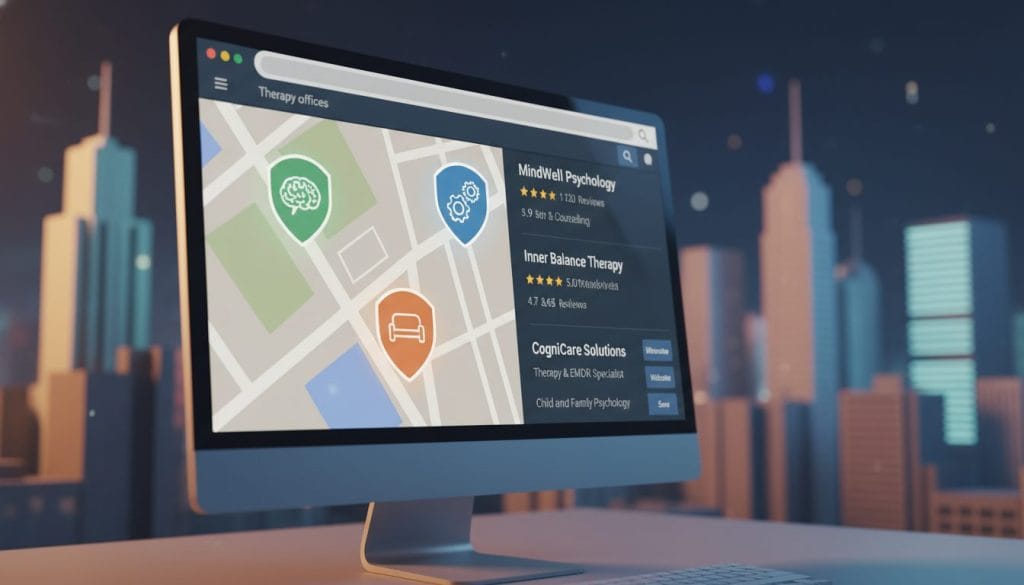
Local intent beats “nice website” most days
When someone types “psychologist near me”, “anxiety therapy [suburb]” or “counsellor Adelaide”, they want a local option now. A nice site helps conversion, but your google business profile and map listing usually start the conversation.
Relevance, distance, prominence: three levers you can influence
- Relevance — match categories and services to the search. Action: update categories/services on your profile.
- Distance — be where they are. Action: confirm service area and address so maps place you correctly.
- Prominence — earn trust with reviews, photos and citations. Action: collect ethical reviews and add real images.
Quick note: search engines cross‑check your details across your website and the wider web. Inconsistencies are tiny trust leaks that hurt local search results and ranking.
Competition in metro areas like Adelaide is real. Nail these basics and the rest of this article is a tidy checklist to get shown more often.
Key takeaways you can fix this week
Fixing a few trust and tech details will bring you more calls in less time. Below are five practical actions you can finish this week. They’re ethical, low effort and built to help the right people find you.

- Finish your google business profile — set accurate categories, list services, add an appointment link and hours. Then keep it warm with one small weekly post.
- Match your NAP everywhere — make name, address and phone identical on your website, directories and insurer listings so search stops doubting you.
- Build reviews ethically — ask past colleagues or referring professionals, not active clients. Reply courteously and without any client details to protect privacy.
- Improve local pages and site speed — add fast, mobile-friendly service pages so people can book in one visit to your website.
- Use photos and short videos — simple visuals act as proof of life and help your business profile feel current and safe.
You’re not trying to game search — you’re making it easier for the right people to find and trust you.
1. Reason one: your Google Business Profile isn’t fully optimised (or it’s half-finished)
An unfinished business profile tells search engines and people you’re not ready to take bookings, and that costs you clicks and calls. If your google business profile is incomplete, search can’t confidently match you to local searches — so you get buried even when your website is fine.
Choose categories that actually match what you do
Pick one primary category that fits your main work, then add supporting categories that reflect real offerings — for example Psychologist, Counsellor or Psychotherapist where relevant. The primary category carries the most weight for how your profile appears in searches.
Fill every field that reduces friction
Hours, phone, appointment URL, website link, service list, insurance info and accessibility details all cut friction for callers and clients. Add a clear description and specific services so the profile shows up for more queries.
Why completeness matters — and a quick tip
Complete profiles act as trust signals. They get more engagement and appointment actions, and often appear before websites for local queries. Wrong hours or missing links kill conversions and invite complaints.
Mate tip: set a monthly reminder to check your details after public holidays so nothing slips out of date.
Reason two: your practice details aren’t consistent across the web (NAP mismatch)
Direct answer: A mismatched suite number, spelling or phone across listings tells search engines and users you’re inconsistent, so they pick someone else. Fixing every listing to the same name, address and phone usually lifts calls fast — it’s basic trust work, not marketing magic.
Where mismatches usually hide
Old suite numbers, “St” versus “Street”, different contact numbers, and outdated insurer or Psychology Today entries are common culprits.
What consistent actually means
Same spelling, same formatting, the same suburb/state style, the same primary phone and identical business name. Tiny differences break the signal.
Cleanup checklist
- Export every citation and listing into a spreadsheet.
- Prioritise high-authority listings and insurer directories; update those first.
- Fix duplicates, remove old addresses and unify abbreviations.
- Update Psychology Today and any health-sector directories to match your website.
- Re-check changes in 2–4 weeks and log results in the sheet.
Pro tip: keep the spreadsheet so you don’t repeat the same hunt next year. Sources show citation consistency improves SEO trust and confirms location data.
“Google’s not judging your therapy skills, it’s judging whether your suite number is having an identity crisis.”
Reason three: you’re targeting therapist keywords people don’t actually search
Direct answer: If your pages use clinical jargon rather than plain words, people won’t find you — they type simple, local queries when they need help. Optimise for the language your clients use and match each service page to clear search intent to get more enquiries, fast.
Plain-English search intent vs clinical terms
Most people type short, problem-focused phrases like “help with panic attacks” or “counselling near me”, not textbook terms. Contrast that with clinical language such as “behavioural intervention strategies” — useful in clinical notes, not in search boxes.
Local keyword mapping: match one service per page
Give each page a single theme. Use one core term, a couple of related keywords, and clear location cues so search understands the page purpose.
- Pick a core phrase: e.g. “psychologist Adelaide”.
- Add supporting phrases: “anxiety therapy Norwood”, “trauma counselling Glenelg”.
- Use plain labels in headings and meta copy so search and users match the intent.
Quick wins: swap complex clinical labels for client‑facing terms, create local pages for suburbs, and map related keywords to the right page. This is SEO, not stuffing — it’s about speaking like your clients so search and people connect.
Reason four: your service descriptions are too vague for Google to match you to searches
Direct answer: If your services read like “we offer support for many issues”, search and people can’t confidently match you to specialty searches — so you won’t show up when someone needs exactly what you do.
Service list that helps you show up for specialty searches
Make a tight, specific services list. Examples that work well:
- anxiety therapy
- trauma therapy / EMDR (if you offer it)
- couples counselling
- ADHD assessment
- grief counselling, teen counselling, LGBTQ+ supportive therapy
How to write service content that actually helps
Describe who the service is for, the common problems it helps, how you deliver it (in‑person or telehealth) and a simple location cue. Keep it short and specific.
Location signals done right: name your base area and a sensible catchment — avoid listing 20 suburbs. Too many micro‑locations looks like keyword stuffing and lowers trust.
“Make it easy for search to play matchmaker between your skills and someone’s late‑night search.”
Mini template: “Service + audience + problems + location + delivery option.” Use that as the basis for each service page and your profile content to improve local relevance and community reach.
Reason five: you’re not using Google Posts, so your profile looks asleep
Direct answer: If your business profile never changes, people assume it’s closed or ignored — and they move on.
Posts are tiny updates on your google business profile that add a freshness signal and give people a reason to click, call or book. They’re not ads; they’re short, timely content that shows you’re taking new clients and running real sessions.
What to post without turning into an influencer
Keep content professional and simple. Good post types for clinicians:
- Appointment slots or last‑minute availability.
- Workshop or webinar announcements and booking links.
- Short mental health tips (one idea per post) and simple “what to expect” notes.
- Community events or public talks you’re part of.
Posting rhythm that’s sustainable
Aim for 1–2 posts weekly. Short, repeatable themes make it doable between sessions. Reuse a tip, an availability update, then a workshop notice — rinse and repeat.
Ethical guardrails
No client stories, no identifying details, and no direct solicitation like “DM me your trauma”. Keep posts educational and invitational so you protect privacy and stay professional.
You don’t need to dance on Reels. You just need to look alive.
Photos, videos and “proof of life”: the easiest engagement boost you’re ignoring
Real photos and short clips are the quickest way to show you’re open, local and human. They cut uncertainty and help potential clients decide to call.
Proof of life — why real visuals matter
Real images reassure people you exist, are approachable and current. That builds immediate trust and reduces anxiety for someone searching late at night.
Photo checklist
- Exterior — so clients can find the door.
- Reception / waiting room — tidy, welcoming.
- Consulting room — tasteful, private and calm.
- Accessibility cues — ramps, signage, parking.
- Team headshots — friendly, professional photos of clinicians or staff.
Why stock images can hurt
Stock photos feel generic. They lower perceived safety and make a service look templated, not local. Use real shots instead.
Simple video ideas
- 30‑second intro — who you are and how you help.
- Office tour — show how to get in and where to park.
- “What to expect” — a calm walk‑through of a first session.
Quick tip: update visuals quarterly and reuse short clips on social media for steady engagement. Fresh visuals lift clicks and help convert potential clients into bookings.
“Profiles with photos get more engagement; visuals build warmth and trust.”
Reviews that build trust without breaking ethics
A well-handled review strategy builds trust in your local community without risking confidentiality. Keep requests ethical, keep replies general, and you’ll lift both client confidence and local ranking.
Who you can ask (and who you must not)
Do not ask active clients for public reviews, even if they offer. That crosses an ethical line.
Ask instead: workshop attendees, webinar participants, referral partners, allied health colleagues and community organisers.
Simple ask script
“If you found today useful, would you mind leaving a short review about the event? No pressure — just a line about your experience.”
How to respond safely
- Thank them warmly.
- Stay general — don’t confirm a therapeutic relationship or outcomes.
- Invite private contact if there’s a concern.
“When you reply to reviews, write as if you’re speaking to the whole community, not the individual. Be grateful, be brief, and don’t confirm a therapeutic relationship.”
Why it matters: thoughtful reviews lift prominence and help ranking while giving people confidence to call. If you’re unsure, say less and move the conversation offline.
| Source | Who to ask | Response style |
|---|---|---|
| Workshops / webinars | Attendees | Grateful, brief, general |
| Professional network | Peers & referral partners | Thank, note collaboration |
| Community events | Organisers/participants | Polite, public-facing |
Your website might be dragging your local visibility down
When someone needs help fast, a slow or sloppy site breaks the chain between a search and a booking. Your website is the proof that confirms your business profile; if details are messy, search engines and callers get uncertain and move on.
Google cross‑checks what it finds on your site
Search engines check that NAP on your website matches your profile, that local service pages exist, and that contact details are easy to find. If those cues don’t line up, your profile loses trust.
Speed and mobile usability matter for stressed searchers
People searching late, anxious or in a hurry will bail if a page hangs. Slow load times and clunky mobile layouts reduce conversions and hurt overall performance.
Practical fixes that don’t require a developer:
- Compress images and lazy‑load media to boost load times.
- Disable heavy plugins and clean navigation so pages open fast.
- Make click‑to‑call obvious and keep contact forms tiny.
Your site doesn’t need fireworks — it needs to load fast and tell the truth.
Visibility is step one; a clear booking pathway on the website turns searches into clients. These small SEO and performance tweaks support your profile and lift real enquiries.
One table to diagnose the problem fast (GBP vs website vs citations)
Stop guessing where the leak is — this quick check tells you if the problem lives on your profile, your site or in scattered listings.
Quick triage: google business profile gets seen, the website convinces, and citations corroborate your local legitimacy. Each channel plays a different role in driving calls and bookings.
What each channel controls: visibility, trust, conversions
GBP controls local presence and direct interactions like calls and booking clicks.
The website handles conversion — booking forms, service pages and clear contact details.
Citations (listings) validate your address and phone and supply trust signals across the web.
Common symptoms and the most likely fix
| Channel | Controls | Common symptom | Most likely fix |
|---|---|---|---|
| Google Business Profile | Local presence, interactions, insights data | Appears in maps but gets few clicks | Complete hours, services, photos; post weekly |
| Website | Conversions, detailed service pages, contact details | High visits, low bookings | Speed up pages, add clear CTAs and matching details |
| Citations / listings | Legitimacy and cross‑site data consistency | Conflicting addresses or duplicate entries | Clean NAP, remove duplicates, unify formatting |
Simple strategy: fix the channel that shows the symptom first, then cross‑check the other two so results stick.
The stats that explain why this work pays off
Small, repeatable wins add up — and the numbers make that crystal clear.
First‑page clicks
95% of clicks go to the first page (source: provided web source). In plain terms, page two might as well be a witness protection program for your listing. Action: fix your profile, tidy NAP and sharpen local pages so you land on page one.
How often people look things up
On average a person uses the internet three to four times a day for info and services (source: provided web source). Those are intent moments — repeat exposure builds trust. Action: stay active with weekly posts and keep mobile speed fast to catch those searches.
Profile engagement
Profiles with photos get noticeably more engagement, and fresh activity boosts interactions (source: provided web source). That means add real photos, post updates and respond to signals. Small changes in data and content lead to steady growth in calls from people searching for help.
What a local SEO tidy‑up looks like in practice (Adelaide‑friendly)
A small, steady tidy‑up often beats a weekend overhaul when you only have clinic hours to spare. Do a little each week and the site and listings stay healthy without stealing your time.
A simple weekly routine you can keep up between sessions
- 10–15 minutes: add one Post, upload one photo, check Q&A and glance at profile insights (calls, clicks, queries).
- Reply to any new reviews using a safe template and flag anything that needs a private follow up.
- Stick to 1–2 posts weekly — short tips, availability or an upcoming event keeps your listing feeling live.
A monthly routine for citations, services and content refresh
- Audit top citations, fix any NAP drift and update Psychology Today or insurer listings if needed.
- Refresh one service description and add a small website update — a FAQ, short resource or clearer call‑to‑action.
- Check performance metrics and focus updates on the suburbs you genuinely serve — don’t list every area under the sun.
Consistency beats bursts: steady updates send the right signals to search and make your practice look maintained and trustworthy to the local community.
Mini case study: one client result from Loudachris Digital Marketing
Small, methodical fixes changed how often a local Adelaide clinic was found and booked. It isn’t dramatic — just steady work that produced measurable results.
Starting point and first fixes
The clinic wasn’t appearing consistently in map packs, had low calls from its profile and a couple of NAP mismatches across directories.
We fixed categories, hours and added an appointment link, swapped stock photos for real room and team shots, and cleaned top citations. Early wins focused on clarity and trust.
What changed over the following weeks
We kept a steady rhythm: 1–2 posts weekly, added two local service pages, and set up an ethical reviews process for workshop attendees and referral partners.
Performance in the profile improved and the site matched the profile details, so search signals aligned better.
Outcome snapshot and what it means
GBP insights showed more calls and website clicks. The clinic saw conservative but clear results: steady growth in relevant clients’ enquiries rather than random traffic.
“The owner kept the routine — that’s why the lift stuck.”
| Metric | Before | After (6 weeks) |
|---|---|---|
| Profile interactions | Low | Noticeable increase |
| Calls via profile | Few | More regular |
| Local pages indexed | 0–1 pages | 3 pages |
| Referral reviews | Minimal | Several (ethical requests) |
What this means: not instant fame — just practical growth that brings the right clients. You’re the hero if you keep the routine going.
Next step: get a second set of eyes on your setup
Sometimes a fresh pair of eyes spots the tiny mismatches you live with every day. No pressure — if you want reassurance about your local setup, a short audit can save hours of guessing and pointless edits.
Book a free audit at loudachris.com.au
Book a free audit at loudachris.com.au — simple as that. We’ll look at the highest‑impact items and hand you a clear, prioritised list so you can act fast.
What the free audit checks
- google business fields, categories and a google business profile review for completeness.
- NAP consistency across top citations and insurer directories.
- Reviews approach and safe reply templates; Posts cadence and photos.
- Website speed, mobile usability and key service pages.
No hard sell — just a friendly review and a short note on quick wins. If you want a bit more, Chris at Loudachris Digital Marketing can point out the quickest wins, especially for Adelaide locals.
Helpful internal reads: Google Business Profile setup guide, local SEO basics, service page template, contact/audit page.
No pressure. If you want a second set of eyes, that’s what we’re here for.
Conclusion
A few tidy, repeatable edits usually unlock more calls and better local results.
Recap: incomplete google business, NAP mismatches, wrong keywords, vague services and no Posts are the main blockers. Add real photos, ethical reviews, faster website pages and clear service language as easy boosters.
Pick one fix, do it well, then check your business profile insights for changes. Measure, then move to the next item — small steps stick better than big binges.
Be ethical and human: you’re building trust for clients, not gaming a system. Keep requests for reviews safe, avoid asking active clients, and answer public notes without confirming relationships.
If you want confirmation and a clear to‑do list, book a free audit at loudachris.com.au for a prioritised next step.
FAQs
Q: How long does it take to improve local results?
Most google business changes show movement in a few weeks. Website and citation fixes can take longer — often 6–12 weeks — and depend on competition and consistent follow‑up.
Q: Can I ask therapy clients for public reviews in Australia?
Avoid asking active clients. Instead ask workshop attendees, peers or referral partners. Keep replies general, thank reviewers, and never confirm a therapeutic relationship.
Q: What should I post if I hate social media?
Keep it simple: availability, a single practical tip, a short “what to expect” note or a workshop announcement. One to two posts weekly is enough to look active.
Q: Do I need a page for every suburb?
No. Don’t stuff suburbs. Create sensible local pages for areas you actually serve, add clear location cues, and focus on service clarity over quantity.
Q: My profile gets views but no enquiries — what now?
Check website speed, mobile UX, CTAs and booking links. Make contact easy, show photos and clear service pages, then recheck profile insights for improvement.
You’ve already done the hard part — being good at your job. Now make it easier for the right people to find you.
FAQ
Why isn’t my profile showing up in local search results?
How important are categories and services on my business profile?
What’s the easiest quick win I can do this week?
How do I handle reviews without breaching confidentiality?
My website is slow — does that affect local search?
What keywords should I target for better local traffic?
Are photos and videos really worth my time?
How often should I post to my business profile?
Where do NAP mismatches usually hide?
Can responding to reviews improve my search ranking?
What should a local service page include to support my profile?
How do I choose which directories to fix first?
What are safe review prompts I can use?
How do I diagnose whether the problem is my profile, website or citations?
Will improving my local listing bring more clients?

Chris Lourenco is the director of Loudachris Digital Marketing, an Adelaide-based SEO, Google Ads, and web design agency. Chris excels in crafting bespoke, results-driven strategies that help businesses get more traffic, leads and sales.