
When something goes pear-shaped, people don’t browse for a lawyer — they search for answers, fast. You need a presence that turns urgent queries into real enquiries. This guide is short, practical and a bit cheeky — the kind of advice you can action between calls.
These tips are not dark magic. They’re repeatable fixes and habits that help the right people find your law firm at the right time. We’ll cover technical fixes, local visibility, content that builds trust, and conversion tweaks so traffic becomes actual clients.
Think suburbs, states and practice areas — and compliant proof that works for local conditions. Follow a few items on this checklist and you’ll stop leaking leads you already paid for. Written by Chris Lourenco from Loudachris Digital Marketing — short, sharp and practical, with you as the hero.
Key Takeaways
- People search when they need help — be obvious and easy to contact.
- Small technical fixes can lift your website and local visibility.
- Write clear content that answers urgent questions and builds trust.
- Track where enquiries come from and stop wasting paid traffic.
- Implement a few tweaks and you’ll see better results without extra spend.
What actually drives more enquiries from search results
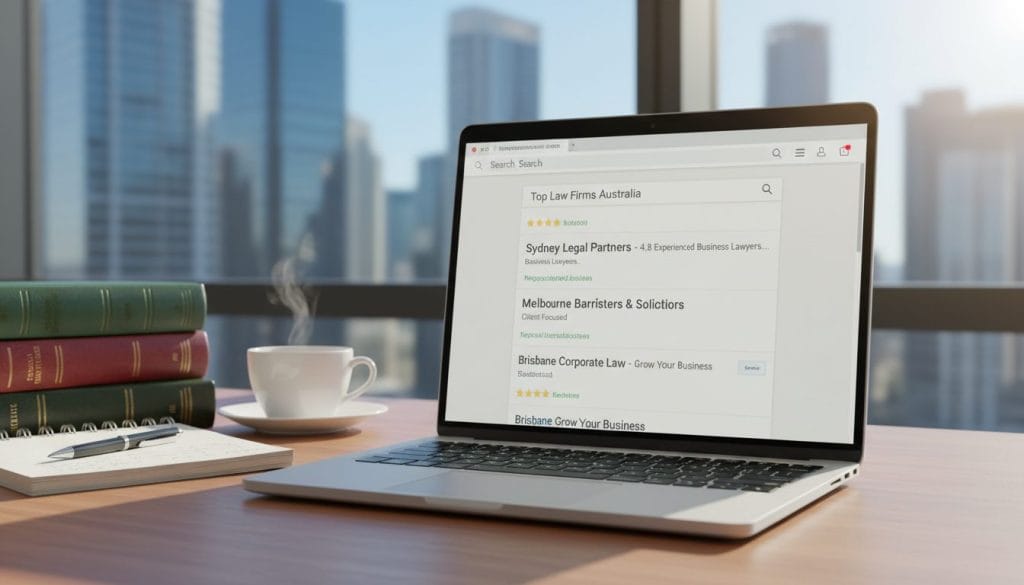
Visibility gets the click, relevance keeps them reading, trust gets the call and clarity locks the booking. That sequence is the whole customer journey in plain English. If you’re not on page one you miss most of the game — most people won’t scroll like they’re reading a novel.
Key Takeaways
- Fix tech basics — stop leaking traffic with slow pages and broken forms.
- Win the Map Pack — top local spots drive nearly 30% CTR for urgent queries.
- Build service pages by intent — match what people actually type when they need help.
- Track calls and forms — measure real enquiries, not just clicks.
- Earn reviews steadily — trust converts clicks into booked consults.
Why “first page or invisible” is not just a saying
Organic results pull roughly 85–90% of clicks, while paid ads get about 10–15%. That’s raw volume you can’t ignore.
Paid ads can shortcut visibility, but organic presence compounds. A well-ranked page keeps attracting traffic after you stop paying.
Organic clicks vs paid clicks: where the volume really is
| Channel | Volume | Cost per click | Speed to results | Best for |
|---|---|---|---|---|
| Organic | 85–90% | Lower over time | Slow to build | Evergreen service pages, steady pipeline |
| Paid | 10–15% | Higher ongoing spend | Immediate | Time-sensitive promos, urgent lead targets |
Practical take: use paid to fill gaps fast, but invest in organic work that builds a pipeline. People searching with urgency expect helpful results. Show up where they look, then make the page do the heavy lifting.
SEO law firms Australia: where most firms are leaving money on the table
Having a website is common; turning it into a consistent source of enquiries is rare. 74% of firms have a website, but only 28% invest in professional SEO support. That gap is your shortcut — do the basics and you beat most competitors in your patch.

The opportunity gap
“Most sites exist; few are set up to convert.”
- Fixing fundamentals wins local visibility fast.
- Simple updates often lift calls and consults without extra ad spend.
What commercial intent looks like
Commercial intent = ready-to-act searches. Examples: “family lawyer Adelaide consultation” or “criminal lawyer bail application”. These queries signal urgency and a local match.
Contrast that with research intent — queries like “what happens if…” Those are useful, but belong on separate pages aimed at education, not immediate bookings.
Goal: not random traffic but qualified enquiries. Map keywords to practice, suburb and urgency, know your practice mix (family, criminal, injury, commercial) and cover real suburbs — not wishful thinking.
Next: first we fix the site foundation, then local visibility, then pages that convert.
Quick technical fixes that stop Google (and clients) bouncing
Fix the basics first — speed, mobile and security — and the rest of your work actually lands. If a page takes too long, or the buttons are tiny on a phone, people leave before you get a chance.
Site speed and Core Web Vitals basics
Core Web Vitals are simple: how fast the page appears, how quickly it responds, and whether things jump around. Compress images, enable caching, reduce plugins and tidy web fonts. Those four moves often halve load time.
Mobile-first usability for stressed-out clients
Most people search on phones, one thumb in play. Use readable text sizes, clear tappable buttons and a single, obvious contact action. If forms need pinching or tiny typing, you lose calls.
HTTPS trust signals
The padlock matters. HTTPS protects form data and builds trust for sensitive enquiries. Install a certificate, force HTTPS across the site and check forms post securely.
“If your site is slow, awkward on mobile, or not secure, you’ll bleed enquiries even if rankings improve.”
Quick checks: run PageSpeed Insights and Mobile-Friendly Test, then fix in this order — speed, mobile, security. Better performance means better engagement and fewer silent bounces.
Need a quick walkthrough? See a practical guide at seo for graphic designers for hands-on steps you can copy across a firm website.
Local SEO that gets you into the Map Pack for your suburbs
When someone searches for help nearby, the Map Pack is where they decide who to call first. It’s prime digital real estate for “near me” queries and it feeds calls, direction requests and quick enquiries.
Google Business Profile: your digital front door
Practical GBP checklist: correct categories, clear services list, quality photos, accurate opening hours, an active Q&A, regular posts and a short description that reads like a real person wrote it.
Name, address, phone — get NAP right
NAP consistency means the same name, address and phone everywhere. Tiny mismatches confuse Google and quietly weaken local rankings. Accuracy beats volume for directory listings; think citations, not spam.
CTR and pipeline maths
Top local results take roughly 29.5% of clicks. If you aren’t first, you lose a big slice of leads. That equals fewer calls and fewer booked consults — even if your website looks great.
Target practice-area + suburb pages the right way
Build one strong page per meaningful suburb + practice combo. Write for humans: proof points, FAQs and clear contact CTAs. Avoid pasting suburb lists across dozens of thin pages.
- Internal link idea: point practice pages to loudachris.com.au/local-seo/ for deeper local marketing guidance.
Practice area pages that convert “research mode” into booked consults
Practice pages are the firm’s frontline — they must turn someone who’s researching into someone who picks up the phone. Build each page to match search intent, remove doubt and make the next step obvious. Keep language calm and clear so a stressed person understands options in one read.
Structure that matches intent
Direct answer (50 words): Each service page should state who it helps, the problems solved, and the immediate next step — above the fold. Evidence: visitor testing shows clear purpose and a single CTA raises contact rates within weeks.
What to include on every page
- Direct answer (50 words): Outline the process, likely timeframes, fee ranges or how fees are charged, and what to bring to the first consult. Evidence: transparency reduces friction and improves form completion.
- Direct answer (50 words): Add practice-specific examples—family (parenting, property), criminal (bail, charges), injury and personal injury (claim steps), commercial (contracts, disputes). Evidence: real examples match search phrases and shorten decision time.
- Direct answer (50 words): Use compliant trust signals: memberships, years of experience, qualifications and anonymised outcomes with “past results don’t guarantee future outcomes” wording. Evidence: compliance-friendly proof raises caller confidence without hype.
| Practice area | Core intent | Key trust signals | CTA structure |
|---|---|---|---|
| Family | Parenting orders, property settlement | Accredited specialist, years’ experience, anonymised outcomes | Short form + phone number, “Book a short consult” |
| Criminal | Bail advice, charge responses | Court experience, member associations, clear disclaimers | Ring now CTA, out-of-hours note |
| Personal injury | Claim steps, compensation timelines | Client stories (anonymised), fee approach explained | Free initial review checkbox on form |
| Commercial | Contract review, dispute resolution | Sector experience, case studies (anonymised) | Request a proposal form, one primary CTA |
Keywords and content tips: Use natural headings, short FAQs and internal links. One calm headline, one primary CTA and a tiny form beats multiple confusing actions. That strategy keeps pages focused on conversions and better results for the firm.
Content that answers real client questions and earns authority
The best content does two jobs: calm the caller and show the next step clearly.
Blogging works because it captures people in research mode and creates many entry points to your website. Sites with a blog generate 67% more leads, so content is not a nice-to-have — it’s a lead engine (Source 1).
Blogging — why it turns readers into enquiries
Write posts that answer specific, urgent questions. That builds trust and gives you multiple chances to convert a visitor into a caller.
“They ask, you answer” topic clusters
Use a pillar page for each practice-suburb combo — for example, “Divorce process in SA” — then add short supporting posts: costs, timeframes, mediation tips and parenting-plan checklists.
- Higher topical depth = more relevant search matches.
- Interlink supporting posts back to the pillar and the relevant service page.
Evergreen guides vs timely updates
Evergreen guides build steady rankings and keep attracting traffic long-term.
Timely updates win short bursts, show you’re current and increase referral shares when laws change.
E-E-A-T checklist for real authority
- Named author with bio and real experience.
- Cite legislation and official sources to back claims.
- Plain-English explanations so a stressed reader understands options fast.
“Organic search drives 53%+ of web traffic — content is where that traffic meets trust.”
Want a simple plan? Link your pillar to loudachris.com.au/content-marketing/ for a step-by-step content strategy that actually brings leads.
Reviews that boost visibility and make strangers trust you faster
Reviews are the short stories strangers read before they decide to pick up the phone. They build instant trust and nudge a hesitant caller into action.
How steady feedback helps rankings and conversions
Review velocity means a steady trickle of recent feedback. That looks natural and more believable than one big cluster every few years.
Recent reviews also drive profile actions—calls, clicks and direction requests—which feed local seo signals and improve pipeline results.
A simple three-step system your team will follow
- Pick the moment: ask when a matter is resolved or the client thanks you for help.
- Send the link: one short message with the review link and a polite request.
- One reminder, then stop: gentle nudge after a week, no guilt or pressure.
Templates (short & human):
Email: “Hi Sam — glad that’s sorted. If you’re comfortable, could you share a quick review here? It helps others find our firm. Thanks.”
SMS: “Thanks Sam — pleased we helped. If you have 30 seconds, would you mind leaving a review? No worries if not.”
| Benefit | What it does | Team action |
|---|---|---|
| Visibility | Boosts local ranking signals | Request at matter close |
| Trust | Increases conversion from callers | Use short, human templates |
| Pipeline | More calls & website clicks | Track sources and respond quickly |
Compliance note: never reveal client details in replies. Keep responses polite, short and factual. No fake reviews, no pressure—just simple, repeatable habits that save time and improve quality of enquiry.
Link building and digital PR that feels ethical (because it is)
A thoughtful link strategy turns community goodwill and expert commentary into measurable online authority. Think of a good link as a referral from someone respected — that’s how search engines and people read it.
Start local. Sponsor a club, fund a scholarship or partner with a community group and ask for a legitimate page that links back to your website. Those links act like real-world endorsements from places your clients trust.
Be media-ready
Nominate one spokesperson, draft short, quote-ready lines on common topics and reply fast when journalists ask. That gets you expert commentary links and raises your firm’s profile without spammy tactics.
Directories that matter
Choose reputable, indexed directories that real people use. Skip paid lists that add no traffic or credibility. Quality listings deliver better long-term results than dozens of low-value entries.
- Think quality, not quantity: one respected link beats ten weak ones.
- Community ideas: sponsorships, scholarships, local projects with a clear link back.
- Press system: one contact, fast responses, prepared quotes.
| Type | Why it works | How to do it |
|---|---|---|
| Community links | Real reputation signal | Sponsor a club or create a scholarship page that links back |
| Expert commentary | Media trust and citations | Nominate one spokesperson and prepare quote-ready lines |
| Reputable directories | Indexed referrals and contact traffic | Use only well-known, relevant listings that people use |
“It doesn’t matter what industry you work in, you want to work with a digital company that genuinely will care about understanding your industry and making your firm grow.”
Quick warning: avoid dodgy link schemes. Paid link networks and spammy swaps risk long-term trust and rankings — the last thing a professional firm needs.
On-page optimisation that helps Google understand your expertise
Treat your website like a shopfront — tidy shelves and clear labels mean less hunting and more calls.
On-page optimisation is about clear labels. When each page has one purpose, both people and the search engine find answers fast.
Keyword mapping by practice area and location
Use one primary term per page and a handful of related keywords. Match them to a real practice and the suburbs you serve.
- Primary term: one clear headline phrase.
- Related terms: 3–5 natural variants inside headings and content.
- Geo signal: suburb names in title, URL and meta description where it fits.
| Page | Primary keyword | Related mentions |
|---|---|---|
| Family services — Suburb | family lawyer [suburb] | fees, timelines, parenting, suburb |
| Injury claims — Suburb | personal injury [suburb] | claims, compensation, free review |
| Commercial contracts | contract review | business, sector, turnaround |
Internal linking that guides clients (and crawlers)
Link for people first. A calm path means less decision fatigue and higher contact rates. Crawlers read the same map.
- Blog post → related service page → contact page.
- Service A ↔ Service B where overlap helps a client choose.
- Pillar page links to suburb-specific practice pages.
| Entry | Next step | Intent |
|---|---|---|
| FAQ post | Service page | Clarify, then contact |
| Service page | Contact form / phone | Book consult |
| Pillar guide | Supporting posts | Depth & trust |
Quick wins: tidy title tags, intent-matching headings, meta descriptions that promise a next step, and one clear call to action per page. Do this and you’ll see cleaner engagement and more qualified enquiries, not just random traffic.
Conversion tweaks that turn traffic into calls and form fills
Getting traffic is easy; turning it into real calls takes deliberate design. Many sites draw visitors, then hide the phone number or present a form that feels like an interrogation. That’s where potential clients drop away.
Above-the-fold: calm, clear and action-focused
Promise what happens next. Say you’ll call back within a set time, who the service helps, and what to do for urgent matters. That reduces panic and sets expectations.
Quick example: “Free 15‑minute call within 24 hours — for parents, injured people and businesses needing fast advice.”
Contact page and booking flow friction killers
Make contact trivial: click-to-call, a two‑field short form, visible email, a map and parking notes. Tiny touches — visible phone on scroll, clear office hours, and a “what to expect” line — cut time to contact.
Proof elements that stay compliant
Use short testimonials, anonymised case outcomes and clear credentials. Add compliance-friendly wording such as “past results do not guarantee future outcomes” so evidence helps without overpromising.
Simple A/B tests and what to watch
- CTA wording: “Call now” vs “Request a quick call”.
- Form length: 2 fields vs 5 fields — shorter often wins.
- Phone placement: top of page vs sticky footer on mobile.
Why it matters: better messaging and proof filters tyre‑kickers and attracts clients who are ready to engage. Small changes lift lead quality and the chance of good results without extra traffic spend.
Measuring ROI without drowning in vanity metrics
Measuring what actually moves the dial keeps your marketing honest and useful. Big traffic spikes look exciting, but they rarely pay the bills. Focus on numbers that turn into real results.
KPIs that matter: rankings, qualified leads and consultations
Track three things: rankings for high‑intent terms, lead volume, and lead quality. Rankings show visibility, but leads and booked consults show commercial value.
Reporting transparency and what a good dashboard should show
Use a real‑time view so you’re not guessing. BizWisdom Analytics gives daily rankings, traffic and conversions — that makes trends obvious and decisions faster.
| Dashboard item | Why it matters | How to use it |
|---|---|---|
| Daily rankings | Shows visibility for priority terms | Spot drops, act fast |
| Traffic & conversions | Separates noise from money metrics | Compare traffic to leads |
| Lead quality data | Flags consults vs low-value enquiries | Prioritise channels that deliver |
Attribution basics: tracking calls, forms and enquiry quality
Use call tracking numbers, form tracking and a short “where did you hear about us?” field. These simple pieces of data make attribution sane, not mystical.
“Monthly reviews should tell you what moved, what we did and what we’ll do next.”
Quick monthly routine: compare the KPI trio, note actions taken, and set one single test for next month. For reporting how‑tos, link to loudachris.com.au/seo-reporting/ for a clear example.
Keep it transparent, keep it simple — good data leads to better results for your business and the team running the strategy.
Choosing an agency partner (or running it in-house) without getting burned
Picking the right partner means asking sharp questions, not taking glossy promises at face value. Treat the choice like hiring a key team member: you want clarity on process, people and outcomes.
Questions to ask about process, deliverables and people
- What’s the process? Ask for a simple month-by-month plan, not a vague list of “activities”.
- What do you deliver? Monthly tasks, content, link work and measurable outcomes — get it written down.
- Who does the work? Names and roles matter — avoid agencies that offshore all the execution anonymously.
- How do you report? Plain-English reports, clear priorities and one action item for the month ahead.
Exclusivity and conflicts — get it in writing
In niche markets, the last thing you want is funding a competitor’s playbook. Ask about exclusivity in your practice area and geography.
If they won’t commit, get clear boundaries in the contract: what’s allowed, what’s not, and a notice period for conflict cases.
What good communication looks like
Plain updates, clear priorities and honesty. A good partner tells you what’s working and what isn’t, then proposes one clear test for the month.
“Maxiom Injury Lawyers: 467% increase in organic clicks” — use this as a benchmark and ask for timeframe, scope and how they define a qualified lead.
Quick checklist before you sign
- Ask for 12‑month milestones and month-by-month tasks.
- Request a named lead contact and the delivery team.
- Clarify exclusivity and conflict rules in writing.
- Confirm reporting cadence and the one KPI that matters to your business.
If you want a second opinion, Chris Lourenco at Loudachris can review proposals and spot hidden risks. See relevant proof at loudachris.com.au/case-studies/ or start with a low-risk review at loudachris.com.au/free-audit/.
Next step: Book a free audit at loudachris.com.au
Conclusion
Here’s a short roadmap to get steady enquiries without drama. Fix technical leaks, win local visibility, build intent-matched service pages, publish helpful content, earn steady reviews, pursue ethical links and optimise conversions with measurement. Do one small thing each week and the site pays back over time.
Search engine optimisation compounds — small, consistent wins beat random bursts. You’re in control: pick one priority, test it for 30 days, then move to the next.
FAQ
How long does seo take for a law firm? Expect meaningful movement in 3–6 months for local terms and 6–12 months for broader practice-area rankings. Early wins come from fixing speed, GBP and conversion points. Track calls and consults, not just traffic.
Is local optimisation worth it for suburban practices? Yes — local visibility drives calls and booked consults. Focus on a strong profile, consistent NAP and one high-quality suburb + practice page. That approach often outperforms broad, thin pages.
Do we need blog content if we already rank? Useful content expands topic coverage and answers urgent questions. Even one monthly post that links to a service page grows authority and brings more qualified clients over time.
How do we track calls from search engine activity? Use call-tracking numbers, form tags and a short “where did you hear about us?” field. Combine those with monthly reporting to see which strategies deliver quality enquiries and booked consults.
If you want a quick second set of eyes, I’m happy to review a single page or your GBP — no pressure, just practical advice. Your next step is the smallest step that moves the needle.
FAQ
What actually drives more enquiries from search results?
Why is “first page or invisible” not just a saying?
Organic clicks vs paid clicks: where does the volume really sit?
Where are firms commonly leaving money on the table?
What does “commercial intent” look like in legal search?
What quick technical fixes stop people bouncing?
How important are Core Web Vitals and site speed?
How do I make mobile-first usability work for stressed clients?
Does HTTPS really matter for legal websites?
How do I get into the Map Pack for my suburbs?
What is Google Business Profile’s role for enquiries?
How strict does NAP consistency need to be?
Can I target practice area + suburb without keyword stuffing?
How do practice area pages convert research mode into booked consults?
What trust elements work best without sounding like hype?
Does blogging actually bring leads for legal practices?
What are “they ask, you answer” topic clusters?
When should I publish evergreen guides vs timely updates?
What are simple E-E-A-T signals I can add?
How does review velocity affect local rankings?
What’s a review request system my team will follow?
What backlink tactics work ethically for legal practices?
Are legal directory listings worth it?
How should I map keywords by practice area and location?
What internal linking helps both clients and crawlers?
What conversion tweaks actually lift enquiries?
How do I fix contact page and booking friction?
What proof elements reassure potential clients?
Which KPIs should I focus on to measure ROI?
What should a clear reporting dashboard show?
How do I attribute calls and forms accurately?
What questions should I ask a potential agency partner?
What’s a realistic benchmark for “good” results?
How do I get a free audit or next steps?

Chris Lourenco is the director of Loudachris Digital Marketing, an Adelaide-based SEO, Google Ads, and web design agency. Chris excels in crafting bespoke, results-driven strategies that help businesses get more traffic, leads and sales.