
Picture this: someone stranded on the side of the Hume, phone in hand, typing “tow truck near me” and calling whoever shows up first.
That moment decides the call you get tonight. These tips are about more calls and better leads, not vanity rankings or keyword stuffing.
What we mean by SEO towing companies is simple: make your site act like a 24/7 dispatcher so drivers find your number, services and location fast. That turns searches into direction requests, calls and booked jobs.
You’re out there running trucks. I’m Chris Lourenco and Loudachris helps make Google behave so your phone rings more often.
Each tip ahead gives a straight answer, quick proof, then a simple “do this next” move. No jargon, just practical steps you can use today.
Key Takeaways
- Map Pack: show up on local maps for urgent searches.
- Site speed and mobile: fast pages get calls, not just clicks.
- Service pages and technical fixes: clear pages for every service and proper site health.
- Citations, content and backlinks: build local trust and relevance.
- Tracking: measure calls, directions and booked jobs to prove value.
Want a hand? Book a free audit at loudachris.com.au
What “towing SEO” actually means when someone’s stranded and searching
A stranded motorist typing for help is ready to call the first trusted option they find.
Search engine optimization for a towing business is simple: make your website and profiles the easiest pick for a driver in trouble. That means being the clear, fast answer when someone types “tow truck near me” or “emergency towing”.

Why those high‑intent searches matter
Keywords like “tow truck near me” and “emergency towing” convert because the searcher has already decided they need help. They’re choosing speed and trust — not reading long articles.
The stranded search journey
- Maps results first — that’s the dispatcher moment.
- Quick site check — is the number obvious and the ETA believable?
- Call, then reviews for reassurance.
Quick sanity check: don’t chase broad search terms if you don’t service that area or job type. Focus local — most calls come from realistic drive times, not national pages. If you want help setting this up, check Loudachris’s local service page for a hand.
Win the Map Pack with Google Business Profile basics (without gaming it)
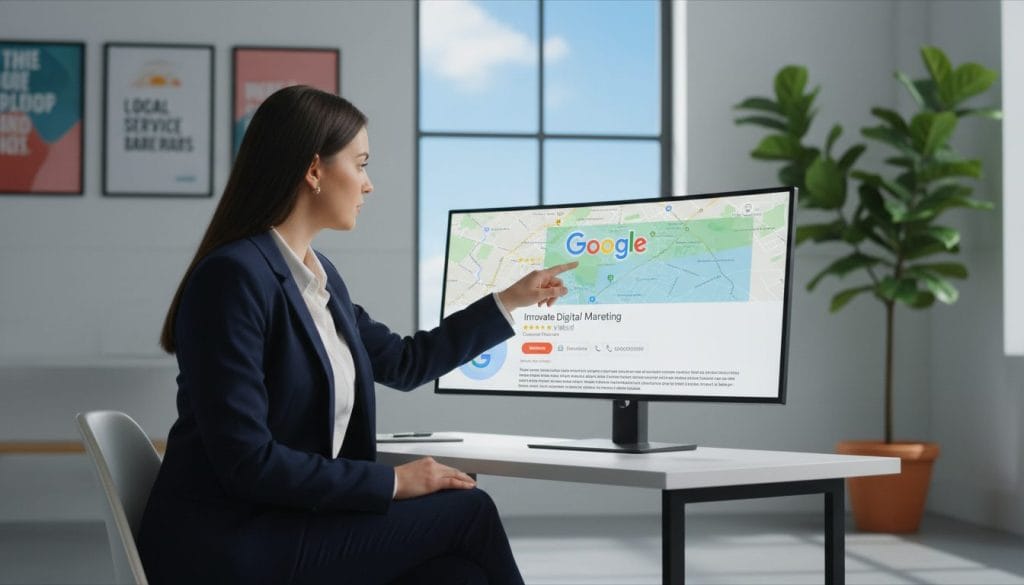
Think of your Google Business profile as the front desk for drivers stuck on the road. If you want calls, the Map Pack is the front door — not your homepage.
Get the essentials right
Start with consistent NAP (name, address, phone). Use the correct primary category and list accurate opening hours — include after‑hours if you truly take calls.
Set realistic service areas for suburbs and regions you can reach fast. Over‑claiming hurts reviews and trust.
Photos that build trust fast
Upload clear shots of real trucks, your team and completed recoveries. No stock photos. Real imagery shortens the “can I trust them?” moment and boosts click‑to‑call.
Keep your profile alive
Post quick updates: wet‑weather tips, holiday hours, new gear. Regular posts signal activity and improve local visibility.
Reviews and Q&A as a conversion lever
- Ask satisfied customers for reviews after a job.
- Reply to every review calmly, even the rough ones.
- Seed the Q&A with common questions — pricing ranges, ETA, payment types.
Result: clear info plus strong reviews reduce comparison shopping and lift direct calls. For a quick checklist and help, see Loudachris’s google business optimisation page.
Fix the website stuff that quietly kills calls
Make your site act like a night‑shift dispatcher: quick, clear and tap-ready.
The calls-first UX means the website’s job is simple: one tap to phone, one tap to directions. If a stressed driver hunts for a number, they won’t wait for fancy layouts.
Mobile-first UX for stressed-out thumbs
- Sticky tap-to-call button visible on every page.
- Big, thumb-friendly CTAs and short forms—ask only for what you need.
- Click-to-get-directions and clear ETA notes; no popups that hide the number.
- Keep navigation minimal: Emergency, Roadside Assist, Contact.
Speed and Core Web Vitals
Slow pages bleed leads. Core Web Vitals are the engine’s vibe check for user experience—fast load, stability and quick interactivity help keep callers on the page.
Practical fixes: compress images, lazy load media, remove heavy plugins, enable caching and pick decent hosting. These moves cut bounce and lift calls and traffic.
Security basics: HTTPS trust signals
HTTPS is non-negotiable. Browser warnings kill conversions instantly. Visible trust signals—secure padlock, simple privacy note—boost confidence and improve search results.
| Issue | Quick fix | Impact |
|---|---|---|
| Slow images | Compress + lazy load | Faster pages, fewer abandons |
| Cluttered mobile UI | One sticky CTA, short nav | More tap-to-call actions |
| Unsecured pages | Install SSL, show padlock | Higher trust, fewer browser warnings |
| Heavy plugins | Remove or replace | Better speed and reliability |
Do this next: run a simple page speed test, add a sticky call button, and confirm HTTPS across the site. Small fixes make big differences in conversion and long-term optimisation for your search engine visibility.
SEO towing companies: build service pages that match how Aussies search
People search for help by problem, not by a vague services page.
If your site has one generic page called “Towing”, you’ll lose calls. Drivers want a clear match: emergency pickup, battery jump, winch‑out or accident recovery. Make a separate page for each common job so the answer is obvious.
Split pages by real jobs
- Emergency towing — urgent, quick ETA and after‑hours note.
- Roadside assistance — battery, tyres, lockouts.
- Vehicle recovery / accident towing — capacity, insurance handling.
- Flatbed / tilt tray and long‑distance towing — only if you actually offer them.
Location targeting matters — list suburbs and regions you truly cover and add dispatch times or typical ETAs. Don’t paste long suburb lists; show proof so people trust your coverage rather than suspect spam.
On-page essentials that earn clicks
Use title tags with service + location, clear headings that match the job type, and meta descriptions that read like a human reply. Add short FAQs on price factors, after‑hours fees and payment methods to remove friction before the call.
Quick linking tip: internally link from the homepage to core service pages, and from each service to relevant location pages. If you want a hand building sensible service pages, see a local specialist at Loudachris.
Technical SEO that helps Google crawl, index, and rank the right pages
Make it dead simple for search engines to find your best pages — that’s the whole point of technical work. When the site is tidy, Google shows the right page to the right person fast.
Clean site structure and internal linking
Use a clear hierarchy: Homepage → Services → Service area pages. That stops the wrong page (like About) showing up for urgent searches.
Link related service pages together — for example, Recovery links to Winch‑out — and add genuine “areas we serve” links where relevant.
XML sitemaps that actually help
Keep sitemaps small and current. Only include index‑worthy pages and remove junk URLs. A tidy sitemap speeds discovery and avoids confusion.
Crawl and indexing health checks
Use Google Search Console to spot coverage errors, duplicate titles and pages not indexed. Read server log files — they’re the truth serum for crawl behaviour.
Performance benchmarks
Aim for server response under 100ms, and keep HTML crawl requests above 95%. Faster servers help crawling and the user experience.
Simple rule: no spam pages, no doorway tricks — just a clean structure, good links and quality pages that earn trust.
Citations and directory listings that prove you’re legit (and local)
A single wrong digit in an online listing can send a call to nowhere — fix that first.
Citations are a simple digital paper trail. When your business details match across the web, search engines and customers trust you more. That trust lifts local visibility and brings more direct leads.
NAP consistency so you don’t leak calls
Use the same spelling, phone format, unit/suite info and opening hours everywhere. One mismatched number equals missed jobs. Treat NAP like a legal name — boring but important.
Priority directories to cover
- Aussie local directories and Google Business-style profiles.
- Automotive and roadside-assistance listings that customers expect.
- Chamber of commerce and community sites for local credibility.
Quick audit checklist
Search your business name plus any old phone numbers, fix duplicates, then re-check monthly or quarterly. If you run a service-area business and use a home address, hide the street address where allowed and verify service suburbs instead.
Result: consistent citations boost Map Pack confidence, reduce confused callers and improve your local presence and visibility.
Content that answers real breakdown questions and brings in steady leads
Good content answers questions before the phone even rings.
Think of your site as a calm dispatcher: short pages that set expectations build trust. That means focused posts about price, wait times and safety that warm callers up.
Blog topics that convert
- How much does towing cost in Adelaide? List factors that affect price so callers aren’t surprised.
- How long will a tow take? Give ETAs by time of day and suburb.
- What to do if you break down on a highway — safety steps and what info to text your operator.
- Tilt tray vs tow dolly — short guide on when each is right.
Visual content and image basics
Short videos reduce bounce and build trust. Film quick clips: dispatching, loading a car, what info to send, and a meet‑the‑driver intro.
Image SEO basics — rename files like tow-truck-ashfield-service.jpg, write honest alt text, and show real jobs not stock photos. Stock shots of a US freeway don’t help someone on Port Wakefield Road.
| Content type | Quick win | Why it works |
|---|---|---|
| How-to blog | Answer common pricing & ETA questions | Pre-sells trust; callers are calmer and more likely to book |
| Short video | Embed on service pages + repost to social media | Lowers bounce, boosts time on site, builds familiarity |
| Job photos | Descriptive filenames & real alt text | Improves image search and accessibility, shows credibility |
Do this next: pick two blog ideas, film one 30‑second clip, post it to social media and embed the best clip on the relevant service page for instant traffic and warmer customers.
Authority signals: backlinks, partnerships, and local PR that make rankings stick
Local relationships are your best marketing asset. Build a few strong mentions from trusted automotive and community sites, and search engines treat your site like a recommended local service.
What a link is: think of it as a referral. A reputable mechanic or smash‑repair business linking to your page tells search engines you’re reliable. For a towing company, that trust converts to calls and bookings.
Practical, safe link ideas
- Partner with local mechanics, tyre shops and smash repairers for cross‑referrals.
- Sponsor a club event or community page and earn a legit local mention.
- Pitch short stories to local news sites about roadside safety or community work.
- Get listed on relevant automotive directories that actually vet businesses.
Quality over quantity: one link from a known local garage beats dozens of low‑value directories. Keep the focus on a few relevant referrals and a steady outreach strategy.
“The focus should be on showing up when drivers need immediate help and building consistent visibility,” — Jon Fish, Director of Search.
Combine good reviews with solid links and your results last longer than paid ads alone. No buying links, no spam comments, no overseas networks — just honest, local work that builds real authority.
Track what’s working so you can double down (not guess)
Measure the moments that turn searches into calls, then copy what works.
If you’re not tracking results, you’re just vibing — and vibes don’t pay for fuel. Use a few simple tools weekly to see which pages and updates actually bring calls, direction requests and booked jobs.
Google Search Console: queries, impressions, clicks, CTR
Search Console shows which queries trigger impressions and which pages get clicks. Find pages with high impressions but low clicks and tweak titles or meta descriptions.
CTR is simply clicks divided by impressions — it tells you how often people pick your listing from the search results. A low CTR on an emergency page means the listing needs a clearer promise or better call text.
GBP Insights: calls, direction requests, website visits
Google Business Profile insights show real-world actions: calls, direction requests and website visits. Track spikes and tie them back to reviews, posts or service updates to see what prompted the lift.
What good results can look like
Practical benchmarks: more calls from the profile, higher CTR on emergency service pages, improved rankings in core suburbs and fewer wasted website visits that never call.
Example benchmark: in one published case by Thrive, an SEO + CRO campaign delivered +32.44% organic traffic and +3,478 new leads in seven months — a useful yardstick, not a promise.
| Tool | What it measures | What to do next |
|---|---|---|
| Search Console | Queries, impressions, clicks, CTR | Fix titles/meta, improve low‑CTR pages |
| GBP Insights | Calls, direction requests, website visits | Link spikes to reviews/posts; replicate wins |
| Analytics / call tracking | Session paths, goal completions, call volumes | Reduce wasted pages, optimise top paths to call |
- Do this now: check Search Console for high-impression queries and boost the CTR on those pages.
- Match GBP spikes to recent changes — a new review or post can move calls fast.
- Set one clear KPI: weekly calls from your service pages; track it and adjust tactics that raise it.
“If you can measure it, you can improve it — and for local services, improvements show up in the phone log.”
Want a simple audit? I can run a quick check and point to the three metrics you should watch first as part of an easy seo strategy. No hard sell — just clear steps to more leads.
Conclusion
Wrap this up with a simple system that turns roadside searches into real phone calls.
Quick checklist: tidy your Google Business profile, fix mobile UX and speed, build clear service pages, ensure crawlable site structure, keep citations consistent, publish short helpful content, and earn a few solid local links. These moves lift visibility and bring more leads, not noise.
Consistent tweaks beat one-off bursts. Want a hand? Book a free audit at loudachris.com.au — Chris at Loudachris can point to the three things to fix first.
FAQ
How long to see results? Expect improvements in weeks for profile actions, and 3–6 months for steady organic lift. Track calls and direction requests to measure real impact.
Do I need pages for every suburb? No — focus on core service pages and a few targeted area pages that reflect real drive times and demand. Quality beats long suburb lists.
What to post on Google Business Profile? Short updates: ETA notes, after‑hours availability, recent photos and quick safety tips. Those posts can prompt calls and direction requests fast.
FAQ
What are the most effective SEO tips for tow truck and roadside assistance businesses?
When someone’s stranded and searching, what does good search optimisation actually mean?
How do I win the Map Pack without resorting to spammy tricks?
What website issues quietly kill calls and leads?
How should I structure service pages to match how Aussies search?
What technical checks keep Google crawling and indexing the right pages?
How important are directories and citations for a local tow business?
What content actually brings steady leads for a vehicle recovery or tow service?
Are backlinks worth chasing, and where should they come from?
What metrics should I track to know the marketing is working?

Chris Lourenco is the director of Loudachris Digital Marketing, an Adelaide-based SEO, Google Ads, and web design agency. Chris excels in crafting bespoke, results-driven strategies that help businesses get more traffic, leads and sales.